High-flyer engagement

High-Flyer Engagement: Capitalizing on Airport Terminal Advertising for Premium Brands

When we go to an airport, there is actually a lot of waiting involved. We wait to check in, go through immigration, wait for boarding and sometimes just walk around when there is still time before the flight. During that time, we will probably see different advertisements around the terminal without really looking for them.

When waiting for a flight, we usually have some free time. Maybe we sit at the gate, use our phone, get something to eat or just look around. So without noticing it, we might see the same screen or advertisement a few times while we are there.

This is a little different from advertisements that we see while driving. On the road, sometimes I only notice a billboard for a few seconds and then I have already passed it. At an airport, people are usually there for much longer.

There are also many different places inside KLIA. Some passengers are walking around while others are already sitting at their gate waiting for the flight. Because everyone is doing different things, I think where an advertisement is placed is something that needs to be considered.

For example, if I am already sitting at my gate with nothing much to do, I would probably notice the things around me more. But if I am late and rushing to my gate, I probably wouldn’t pay much attention to an advertisement at all.

This is where airport terminal advertising can be useful.

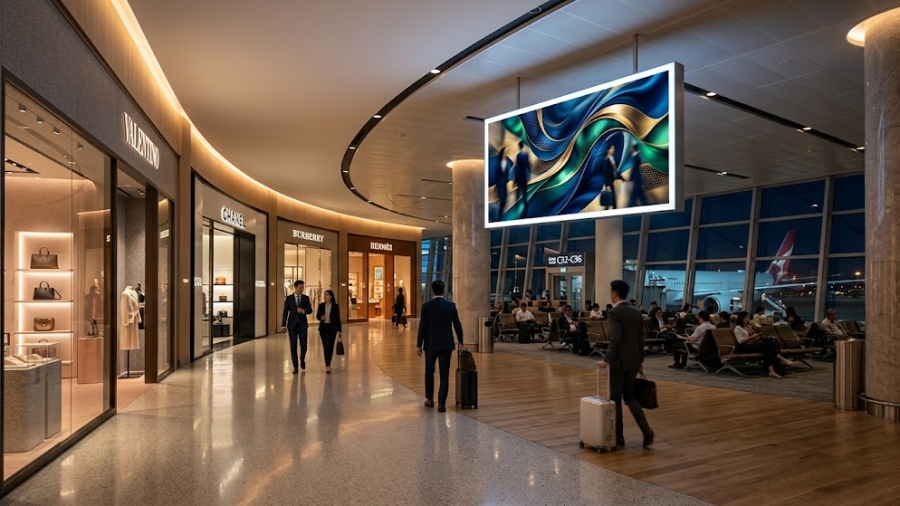
In Malaysia, airports such as KLIA Terminal 1 and Terminal 2 have different areas where advertisements can be displayed. These can include digital screens, lightboxes and other advertising spaces around the terminal.

Unlike advertisements on the road, people inside an airport may have more time to notice what is being shown. However, the location and design of the advertisement still matter.

Advertising in Areas Where Passengers Spend More Time

One thing businesses should think about is where passengers normally spend their time inside the airport.

In some areas, passengers may need to wait before they can move on. Some of these places may have passengers waiting for several minutes before they can continue their journey.

For example, people at a boarding gate usually wait there until it is time to board. This gives them more time to notice an advertisement nearby.

The same idea can apply to immigration or baggage collection areas. Since people may need to wait there, advertisements around these locations have a chance to stay in front of them for longer.

Businesses can also connect airport advertising with advertising in other transport locations. The same campaign can also be shown at MRT stations after passengers leave the airport. This means they may see the same brand again during their journey.

Keep the Advertisement Easy to See

The design is another important part of airport terminal advertising.

When people are inside an airport, there are already many things around them. There are signs showing where to go, flight information screens, shops, restaurants and many other things. Passengers spend more time in some parts of an airport, such as boarding gates, immigration and baggage collection.

For example, people waiting at a boarding gate may stay there for several minutes. This gives them more time to notice advertisements nearby.

The same can happen at immigration or baggage collection because passengers usually have to wait before moving on.

Airport advertising can also be connected with other transport advertising. For example, the same campaign can appear at the airport and later at MRT stations in the city.

Advertising Near Airport Shops

Another area businesses can consider is the shopping section of an airport.

Airports usually have many shops, restaurants and duty-free stores. While waiting for their flight, passengers may walk around these areas.

This gives businesses another place to advertise. For example, someone may see an advertisement for a perfume and later notice the same product inside a nearby shop.

Digital screens can also show different advertisements throughout the day. This gives businesses more flexibility without having to replace a printed advertisement. It can work for other products too, especially things that people normally find inside an airport such as beauty products, watches, clothes or travel items.

Digital screens also make it easier to change what people see. The same screen does not have to show one advertisement the whole day. Something shown in the morning can be changed later depending on the campaign.

This is quite different from a printed advertisement. If a business wants to change a printed one, the old advertisement normally has to be replaced. With a digital screen, the content can simply be changed when needed.

Choosing the Right Location

Different areas in an airport have different types of passengers. People at the boarding gate may be sitting and waiting, while people near the shops are usually walking around.

This is why businesses should not only choose the busiest area. They should also think about who normally uses that area.

The time people spend there also matters. Someone waiting for a flight may notice an advertisement longer than someone who is just walking past. Because of this, the advertisement should match the location. A waiting area can have more information, while an advertisement in a busy walkway should be simpler.

Someone sitting near a boarding gate may have several minutes to notice an advertisement. On the other hand, someone walking through a corridor may only see it briefly.

Knowing this can help businesses decide both where to advertise and how much information should be included in the design.

Conclusion

Airport terminal advertising gives businesses another way to reach people while they are travelling. Airports have many possible advertising locations, including check-in areas, boarding gates, immigration areas and shopping sections.

However, the location and design still matter. Businesses should choose an area that suits their audience and keep the message clear and easy to notice.

Read Next: 5 Critical Mistakes to Avoid When Planning Your Next Airport Digital OOH Campaign

To explore premium ad placements across KLIA Terminal 1 and 2, contact us today for a tailored airport media consultation.
Digital Billboard Advertising

Digital Billboard Advertising Malaysia | High Impact LED Outdoor Marketing

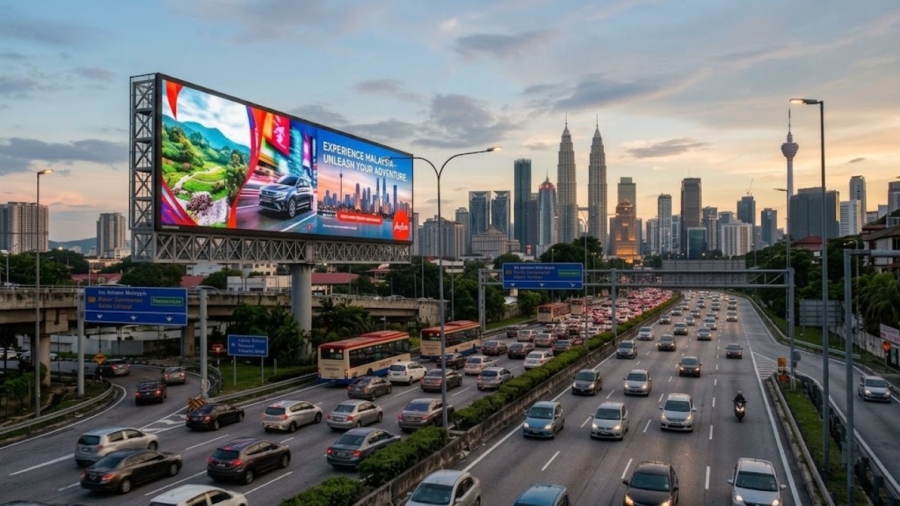
Billboards have been around Malaysian roads for a long time. On a drive through places such as Kuala Lumpur or Petaling Jaya, you are likely to come across quite a few of them along the way.

The difference today is that not every billboard uses a printed poster anymore. Printed billboards are still around, but large digital screens have become another familiar sight, especially along roads with heavy traffic.

With digital billboard advertising, businesses can place their advertisements on these screens instead of depending on a single printed visual. The content can also be changed when a campaign needs a different message or design.

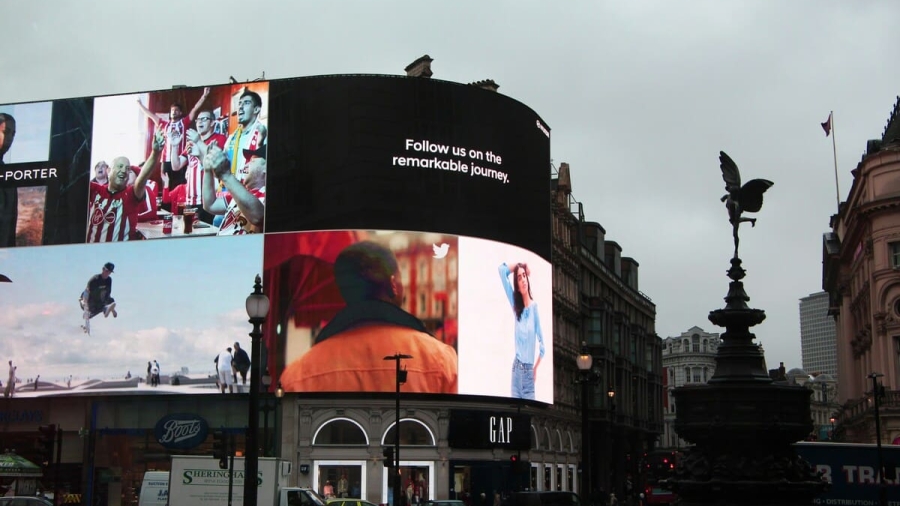
There is another obvious difference when you see one on the road: the screen does not have to stay still. It might show a few different visuals or a short animation. For someone passing the location, that movement can make the screen easier to notice among all the other signs and advertisements nearby.

Why Digital Billboard Advertising Gets Attention

On a busy road, there is a lot competing for a person’s attention. Shops, road signs and other advertisements may all appear within the same stretch of road.

Digital billboards provide more flexibility than traditional printed billboards because the content shown on the screen can change. A company might display one promotion in the morning and another campaign later in the day.

Benefits of Digital Billboard Advertising

1. High Traffic Exposure

Where a billboard is placed matters. Busy roads can put an advertisement in front of people at different times throughout the day.

Take someone who uses the same road to get to work. The screen could be there on their morning drive and still be there when they head home later.

They might not remember it the first time. But after passing it on several different days, the name on the screen may become easier to recognise.

2. More Flexibility for Different Campaigns

A printed billboard normally displays the same design until it is physically replaced. A digital screen works differently because the advertising material can be changed electronically.

This can be useful for businesses running several campaigns. For example, a restaurant may want to promote one menu during lunch hours and another promotion later in the evening.

Companies launching new products can also update their advertising material without having to replace an entire printed billboard.

3. Helps People Remember the Brand

Most mornings, the same people use the same roads to get to work. A billboard on that route can become something they see regularly, even if they never stop to look at it properly.

Eventually, a logo they have seen along the road might be one they recognise somewhere else.

Billboards are also viewed very quickly. Someone in a passing car does not have time to read a full paragraph, so there is little point in filling the screen with too many words.

4.Suitable for Different Campaigns

Digital screens allow businesses to use photographs, graphics and moving content rather than relying on one static image.

A campaign does not always have to use the same artwork from beginning to end. The visuals on a digital billboard can be updated when there is something new to promote.

This can be handy when a business has several promotions running at different times. The billboard can simply be another part of the overall campaign.

Who Can Use Digital Billboard Advertising?

You may see different kinds of businesses advertising on these screens. Shops might feature a sale, while a restaurant might show something from its latest menu.

Other industries use them too. Car brands can introduce a model, property companies can show their projects, and an event organiser might advertise an upcoming event. The type of content really depends on what needs to be promoted.

The audience matters as well. Think about where people are going when they pass the screen. Someone travelling through a city shopping area may be very different from someone driving along a highway every morning.

Why Location and Design Still Matter

Putting an advertisement on a digital screen does not automatically mean people will pay attention to it. Where the screen is placed and what appears on it still make a difference.

Think about the view from the road. Can people actually read the words? Is the screen somewhere the intended audience is likely to pass? These are practical things worth checking before a campaign goes live.

There is also no need to squeeze everything into one advertisement. Pick the information people need to notice first. Extra details can be provided elsewhere for anyone who wants to know more.

Why Businesses in Malaysia Consider Digital Billboards

Spend some time on the road in Malaysia and billboards are difficult to miss. You will see them around highways, town centres and other places where plenty of people pass each day.

For a business, they offer a way of getting a message in front of people while they are out travelling, rather than only reaching them when they are online.

Another practical difference is that the content does not have to remain unchanged. New artwork can be put up when the campaign changes.

Conclusion

Digital billboards offer a dynamic, high-impact way to advertise outside where your audience travels daily. While placement and clear visuals remain crucial for quick recognition, digital screens give you the unmatched flexibility to update your messaging on the fly. If you are ready to launch a high-visibility outdoor campaign at competitive rates, explore our latest digital billboard promotional packages to see available billboard slots across Malaysia.

What Is a Digital Billboard - Avyan Advertising

What Is a Digital Billboard? A Plain-English Guide for Malaysian Businesses

It’s the Screen That Changes Its Mind

You’ve seen them even if you’ve never given them a name. A big, bright screen above a junction or beside a highway, showing one ad, then another, then another. No printed poster, no ladder, no glue. Just a screen that keeps changing what it says.

That’s a digital billboard. If you run a business and you’re wondering what they are, where they appear and whether they could work for you, here’s the plain-English version.

So, What Exactly Is a Digital Billboard?

A digital billboard is an outdoor advertising display that uses a screen, usually LED, instead of a printed poster. The content is a digital file, like an image or a short video, which is uploaded and shown on the screen.

Compared with a traditional printed billboard, the big differences are:

  • It can show more than one ad. Different advertisers take turns on the same screen.
  • It can change quickly. Updating the message means uploading a new file, not printing and installing a new sheet.
  • It can move. Some screens show animation or short video, not just still images.
  • It can be timed. Depending on the setup, different messages can run at different times of day.

Think of a printed billboard as a shop sign and a digital billboard as a noticeboard that updates itself.

Where Do You See Digital Billboards?

Digital billboards aren’t only on highways. They appear in several kinds of places:

  • Roadside and junction screens.
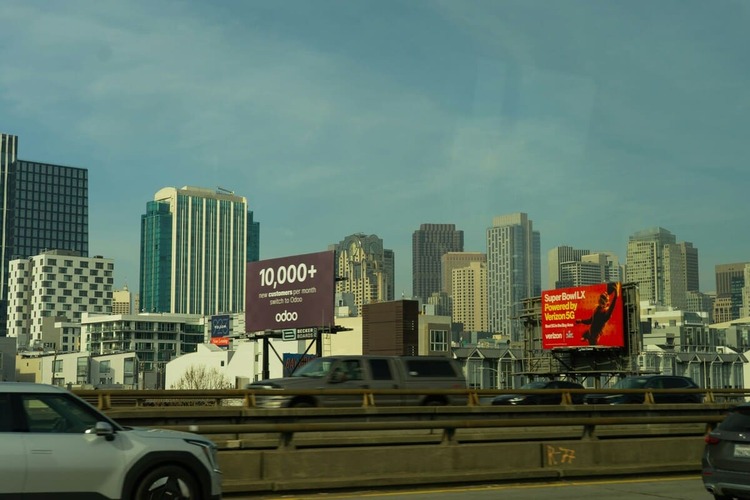
    Large screens beside major roads, aimed at drivers and passengers. These are the ones most people think of first.
  • Building and facade displays.
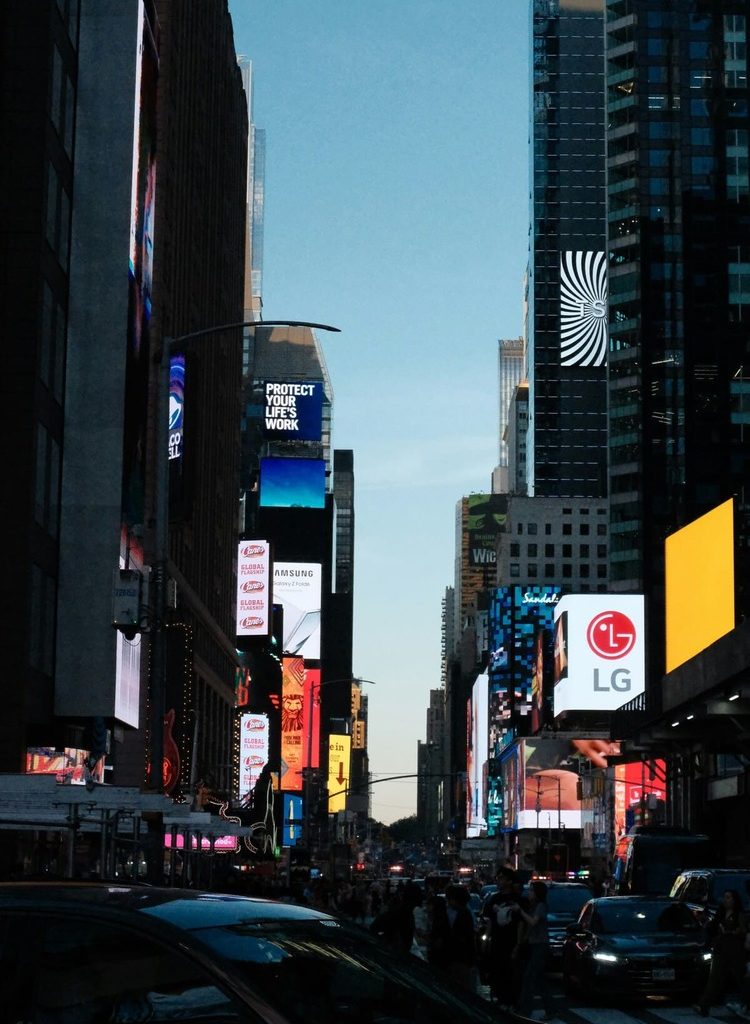
    Big screens on the sides of buildings in busy areas, often seen from far away and from several directions.
  • Mall and indoor screens.
    Screens inside shopping centres and public spaces, seen by people walking and browsing. These tend to allow more detail, since viewers are not moving as fast.
  • Transport screens.
    Screens at stations, airports and bus stops, where people wait or walk through. Viewers here often have a little more time.

Each type suits different goals, so the place matters as much as the screen.

How Does an Ad Appear on One?

Here’s the short version of what happens behind the scenes:

  1. An advertiser books a slot. Often a short time within a repeating loop.
  2. The design is prepared in the right size and format for that screen.
  3. The file is uploaded and scheduled. It’s set to play at certain times or days.
  4. The screen plays the loop. Your ad appears, then other ads take their turn, and then yours comes around again.

The details, like slot length and scheduling options, depend on the site and provider, so it’s worth asking what applies to the screen you have in mind.

What Are Digital Billboards Good For?

  • Promotions that change. A lunch special, a weekend sale or a countdown to an event.
  • Launches. Getting a new outlet or product noticed quickly.
  • Time-based messages. “Breakfast now” in the morning, “Dinner sorted” in the evening.
  • Brands with several messages. One screen can show different products or offers over time.
  • Fast updates. If something changes, you can change the ad without a new print run.
What Is a Digital Billboard 01 - Avyan Advertising

What Are the Limits?

Like any ad type, digital billboards aren’t right for everything.

  • You share the screen. Your ad shows for a short slot, then someone else’s appears.
  • People get a glance. Drivers especially have only a moment, so the message must be short and clear.
  • Tracking is indirect. You can use a QR code, promo code or “how did you hear about us?”, but there’s no click report.
  • Design matters. Files need to match the screen, and complicated creative gets lost.
  • Approvals can apply. Content rules and approval steps vary, so it’s best to ask early.

Digital vs Printed: Which One Do You Need?

Neither is better. They simply do different jobs.

A printed billboard works well if your message is simple and won’t change, and you want a constant presence in one spot. A digital billboard works well if you want to change your message, run timed promotions or show more than one idea.

Many brands use both. A printed board builds steady familiarity in one place, and a digital screen handles the offers that come and go.

A Made-Up Example

Imagine a new bubble tea shop, “Teh Manis Co.”, opening near an office district. Its digital billboard shows the shop’s name and a bold photo of its signature drink. During the morning, the message reads “Start your day sweet.” At lunch, it changes to “Lunch break? 2 minutes away.” In the evening, it shows “Late finish? We’re open till 10pm.”

One screen, three messages, each matched to the moment.

* The shop and the lines are fictional.

Is It Right for You? A Quick Check

  1. Do I have an offer or message that changes?
  2. Can I say it in a few words?
  3. Do my customers pass the screen’s location?
  4. Am I happy to share the screen in return for flexibility?
  5. Do I have a way to track, like a QR code or WhatsApp keyword?

If you said yes to most, a digital billboard is worth considering. If you’d rather have one constant message, a printed billboard may suit you better. You can read more about the wider options on the outdoor billboard advertising page.

The Short Version

A digital billboard is a screen that works like a billboard but can change, move and be timed. It’s flexible, quick to update and suits promotions that don’t stay the same for long. The trade-offs are a shared screen and a short glance, so keep your message simple.

Still deciding between a digital screen and a printed board? Bring your idea to the Avyan team, and we’ll help you work out which one would do more for you, or whether you need both. Start with a quick message. There’s no obligation, only some honest advice on whether a digital billboard suits your plans.

Is Advertising on Billboards Worth It for Small Businesses in Malaysia - Avyan Advertising

Is Advertising on Billboards Worth It for Small Businesses in Malaysia?

“Billboards Are for Big Brands.” Are They, Though?

Picture the billboards you pass on your way to work. Banks, telcos, property launches, big retail names. It’s easy to conclude that billboards are a big-brand game, and that a small business has no place up there.

But that’s not the whole picture. Plenty of local businesses use them, and the real question isn’t whether you’re big enough. It’s whether advertising on billboards fits what you’re trying to do. Let’s go through it honestly, including the parts that don’t flatter billboards.

The Short Answer: Sometimes, and It Depends on the Spot

Billboards are worth it when your customers pass the spot, your message is simple, and you can keep the ad up long enough to be noticed. They’re less worth it when you need instant, trackable sales, have a very tight budget, or sell to people who are nowhere near the location.

In other words, the size of your business matters much less than the match between the billboard and your goal.

Where Billboards Win

1. They’re always on.
A billboard doesn’t pause, scroll away or get skipped. It’s there every morning, every evening and every weekend for as long as the campaign runs.

2. They build familiarity.
People who pass the same road every day see your name again and again. After a few weeks, you stop being a stranger. That matters when it’s time to choose a clinic, a tuition centre or a place to eat.

3. They make a small business look established.
A well-placed billboard can lift how people see you. Even a small shop can look bigger and more trusted with a clear, confident ad on a busy road.

4. They can be very local.
A billboard on a township road reaches the people who live and drive nearby, which is exactly who many small businesses want.

5. They support everything else you do.
Someone sees your billboard, then sees your Facebook ad, then searches your name. Each one helps the others work harder.

Where Billboards Fall Short

Let’s be fair about the downsides.

  • Tracking is indirect. You can use a QR code, promo code or “how did you hear about us?”, but you won’t get a click report.
  • The message must be short. A few words, one image, one action. If your offer is complicated, it won’t fit.
  • It’s seen quickly. Drivers get a glance, so the design has to be sharp.
  • It needs time. One short run rarely does much. Familiarity comes from repetition.
  • It can take planning. Choosing a spot, preparing the design and arranging approvals takes lead time.
  • It isn’t precise. You choose a location, not an individual customer.

None of these are deal-breakers. They just mean billboards suit some jobs better than others.

Is Advertising on Billboards Worth It for Small Businesses in Malaysia 01 - Avyan Advertising

What Small Businesses Should Think About

If you’re a smaller business, a few things matter more than they do for a big brand.

  • Location beats size. A modest billboard where your customers pass every day usually does more than a huge one where they never go.
  • Focus on one area. You don’t need to be everywhere. One or two well-chosen spots near your customers can be enough.
  • Think about what you do with the attention. If someone sees your billboard and searches for you, will they find a clear website, active social pages and an easy way to contact you? A billboard can create interest, but your online presence has to catch it.
  • Plan your budget around time. A smaller billboard that runs for longer often beats a bigger one that disappears quickly. Share your budget openly with your provider, and ask what’s realistic.

Who It Suits

Advertising on billboards tends to work well for:

  • Local service businesses like clinics, tuition centres, salons and workshops
  • Restaurants and cafes wanting to be noticed near their outlet
  • New outlets and launches that need to be known quickly
  • Property agents and developers building a name in an area
  • Events and seasonal promotions with a clear date
  • Brands that want steady, everyday visibility in a particular area

Who Might Want to Wait

It may not be the best first step if you:

  • Only sell online and need to track every ringgit
  • Have a very small budget and could only afford a very short run
  • Serve customers far from any good location
  • Have a complicated offer that can’t be said in a few words
  • Need results this week, not steady growth

In those cases, starting with social media, Google or a smaller local format may make more sense, and billboards can come later.

A Made-Up Example

Imagine a small family-run bakery, “Roti Hangat”, in a busy township. The owner is torn between boosting posts online and putting up a billboard. She notices that most of her customers live within a few kilometres and pass one particular road on the school run. She picks a billboard on that road with a photo of a warm loaf and a simple line: “Fresh from 6am. Next left.” A QR code on the design leads to a WhatsApp ordering chat.

Over a few weeks, orders by WhatsApp go up, and several new customers mention seeing the billboard. Some of the effect is hard to measure, but the bakery feels more visible in the neighbourhood. (The bakery and the story are fictional, so please don’t treat them as real results.)

Five Questions to Check Your Fit

  1. Do my customers pass this spot regularly?
  2. Can I say my offer in a few words?
  3. Can I run the ad for several weeks?
  4. Do I have a clear way to follow up, like a website or WhatsApp?
  5. Am I looking for steady awareness, not instant sales?

Yes to most? Billboards deserve a serious look. No to most? Another channel may suit you better right now.

So, Should You Book One?

For the right small business, with the right spot and a simple message, yes, advertising on billboards can be well worth it. It won’t replace your online presence, and it isn’t the best tool for every goal. But as a steady, visible reminder in the places your customers already travel, it holds its own.

Not sure whether you’re on the yes side or the not-yet side? Tell Avyan about your business, who you want to reach and roughly what you’d like to spend, and we’ll tell you what we think, even if the answer is “wait.” You can share the details here. It’s an opinion, not a pitch, and it could save you from guessing about advertising on billboards.

Advertising on Billboards - Avyan Advertising

Advertising on Billboards: How to Design One Drivers Can Read in 3 Seconds

If They Can’t Read It Before the Next Lamp Post, It’s Too Long

Imagine you’re driving along the highway. Brake lights ahead, a GPS voice in the background, a message pinging on your phone. Somewhere in the corner of your eye is a billboard. You get a second or two to take it in, maybe three if the traffic is slow.

That’s the reality of advertising on billboards. The people you want to reach aren’t standing there reading. They’re moving. So the design has to do its job almost instantly. Here’s how to make that happen.

Start With the “Three-Second” Rule

Three seconds is a handy rule of thumb, not a scientific limit. It simply reminds you of the standard to aim for: if someone can’t understand your billboard in the time it takes to glance at it, it needs simplifying.

Before you design anything, finish this sentence: “When drivers see this, I want them to remember ___.” Just one thing. Your brand name, a new launch or a single offer. Everything else on the billboard exists to support that one thing.

Keep the Words to a Handful

The single biggest design fix is cutting words. A common guideline is to use only a few words, and the fewer you use, the bigger they can be.

  • Aim for a short headline. If you can say it in six words, don’t use twelve.
  • Drop the details. Opening hours, long address lists and terms and conditions don’t belong on a billboard.
  • Put your name where it can be seen. A great line means little if nobody knows who it’s from.
  • Keep one idea. Two offers on one billboard become zero offers in the driver’s memory.

Here’s a made-up before and after to show the difference. (The businesses and lines are fictional.)

Before: “Pintar Academy: Quality Tuition for Primary and Secondary Students. Maths, Science, English and Bahasa Malaysia. Small Classes. Experienced Teachers. Call Now for a Free Trial Class.”

After: “Free Trial Class. Pintar Academy. 3 Minutes From Here.”

The second one can be read in one glance, and it still gives a reason to act.

Make the Text Big and Bold

If the words are small, no one will read them from a car.

  • Use thick, clean fonts. Fancy scripts and thin strokes disappear at a distance.
  • Go as large as the space allows. If it feels too big on your screen, it’s probably about right.
  • Stick to one or two fonts. One for the headline and, if you must, one for supporting text.
  • Be careful with all caps. Short headlines in caps are fine, but long lines get harder to read.
  • Leave space between lines and letters. Cramped text blurs together at speed.

A useful test: shrink your design to the size of a postage stamp on your screen. If you can still make out the message, you’re on the right track.

Advertising on Billboards 01 - Avyan Advertising

Use Colour and Contrast Wisely

Billboards sit in sunlight, shade, rain and darkness, and they’re often seen at an angle. Strong contrast keeps them readable in all of it.

  • Dark on light, or light on dark. Avoid light grey on white or pale text on a busy photo.
  • Two or three colours is plenty. Your brand colours are a good starting point.
  • Watch text over photos. If words sit over an image, make sure the background is calm or darkened.
  • Stand out from the neighbours. Look at the other signs and billboards around the spot. If everything is blue, a bold orange might get more attention.
  • Think about night-time. If your billboard is lit, check how the colours look in the dark.

Choose One Strong Image

A picture can say what words can’t, and it takes no time to read.

  • Use one main visual. A single clear photo or illustration beats a collage.
  • Show the product or result. A steaming bowl of laksa does more than a logo alone.
  • Pick clear over clever. If people need to puzzle it out, you’ve lost them.
  • Use real photos where possible. They feel more honest than generic stock images.
  • Keep the main focus away from the edges. The edges can be trimmed, hidden or hard to see from some angles.

Make the Next Step Easy

Even a great billboard needs to point somewhere. Pick one action and make it simple.

  • A short website address or phone number that’s easy to remember.
  • A direction cue, like “Next left” or “2 minutes away”, if your shop is close.
  • A memorable name, so people can search for you later.
  • A QR code, only if people will see it while stopped or walking. Drivers on a highway can’t scan a code, so on fast roads it’s wasted space.

Match the action to what people can actually do. A driver can’t call or scan, but they can remember a name and look it up later.

Match the Design to the Spot

The same design won’t work equally well everywhere. Fast highways need the shortest message and the biggest text. Slower city roads can handle a short second line. On digital screens, make sure your name stays visible throughout the loop, not just at the end. And ask your billboard provider for the exact size and file requirements before you finalise anything.

A Quick Pre-Print Checklist

  1. The glance test. Show it to a friend for three seconds, then ask what they remember.
  2. The distance test. View a small version from across the room.
  3. The word count. Could you cut a few more words?
  4. The contrast check. Is every word easy to read against its background?
  5. The brand check. Is your name clear and big enough?
  6. The spelling check. Check names, numbers and contact details twice.
  7. The consistency check. Does it match the look of your other ads?

Read It Once, Remember It

A good billboard is a bit like a good road sign. It says one thing, clearly, and then gets out of the way. Cut the words, enlarge the text, pick one image and make the next step obvious, and you’ll give your advertising on billboards the best chance of being remembered.

Got a draft design sitting in a folder somewhere? The team at Avyan is happy to give it an honest once-over and tell you what we’d tweak before it goes anywhere near a billboard. Send it over whenever you’re ready. It’s a quick look, not a sales pitch, and a few small tweaks can make your advertising on billboards a lot easier to read.

Billboard Advertising in Malaysia - Avyan Advertising

Billboard Advertising in Malaysia: How to Choose the Right Location and Format

A Great Billboard in the Wrong Place Is Still Wasted

You can have the cleverest line and the prettiest design, but if the billboard stands where your customers never pass, it won’t do much. Where it goes, and what kind of billboard it is, matter as much as what it says.

If you’re new to billboard advertising, the choices can feel overwhelming. Highway or city street? Static or digital? Big or small? Here’s a simple way to work through it.

Step 1: Start With Your Customer, Not the Billboard

Before looking at locations, ask who you’re trying to reach and where they are.

  • Where do they live, work and shop?
  • How do they travel? By car, motorbike, train or on foot?
  • When are they on the move? Morning rush, lunchtime, weekends?
  • What are they thinking about at that moment? Getting to work, heading home, looking for lunch?

A billboard is not meant to reach everyone. It’s meant to reach the right people, at a place and time that makes sense.

Step 2: Understand the Main Location Types

Different roads and areas give different results.

  • Highways and major roads.
    Drivers pass quickly, often at speed, so a short bold message works best. These locations suit brands that want wide, city-level or state-level visibility, such as property launches, banks, telcos and big retail.
  • City centre roads.
    Slower traffic and more pedestrians mean more time to look. They suit lifestyle, F&B, entertainment and anything linked to the city’s business and shopping areas.
  • Neighbourhood and township roads.
    These roads are part of people’s daily routine. They suit local businesses such as clinics, tuition centres, restaurants and car services, because customers live and travel nearby.
  • Roads near malls, stations and offices.
    These spots catch people on their way to somewhere specific. They work well for retail promotions, events and nearby outlets.
  • Routes towards airports, ports and tourist areas.
    Good for brands targeting visitors, such as hotels, tourism, travel services and car rental.

The right choice depends on your customers, not on which road sounds most impressive.

Step 3: Check the Practical Things About the Spot

Once you have a shortlist, look closely at each one.

  • Visibility. Can drivers and pedestrians see it clearly, or is it hidden behind trees, bridges or other signs?
  • Direction of traffic. Does the billboard face the flow of traffic, so people see it coming toward them?
  • Speed and distance. The faster the traffic, the shorter and larger the message needs to be.
  • Surroundings. Is it surrounded by many other billboards or signs competing for attention?
  • Lighting. Is it visible at night and in the rain, not just on a sunny afternoon?
  • Your own premises. If you want people to visit, how close is it to your shop or outlet?

If possible, visit the spot at different times of day and look at it as a customer would.

Billboard Advertising in Malaysia 01 - Avyan Advertising

Step 4: Choose a Format

Billboards come in a few main formats.

  • Static billboards.
    A printed design that stays the same for the whole campaign. They’re simple, familiar and good for steady brand awareness. The trade-off is that changing the message means reprinting.
  • Digital billboards.
    Screens that can show moving images and different messages. They suit promotions that change often, time-based offers and brands with several messages. The trade-off is that your ad shares the screen, so your time on screen is shorter.
  • Large-format and building wraps.
    Big displays on buildings or structures. They create a strong first impression and suit launches and major brand moments.

A simple way to decide: if your message won’t change, static is often enough. If it will, digital gives you room to adapt.

Step 5: Match the Message to the Spot

The same design won’t work everywhere.

  • Fast roads: a few words, one image, a clear brand name.
  • Slower roads: a little more detail is fine, such as a short second line or a location cue.
  • Near your outlet: add directions, like “Next left” or “2 minutes away”.
  • Digital screens: keep key information on screen for the whole loop, not just the last second.

Whatever the spot, one message and one action is the rule.

Step 6: Ask the Right Questions

When talking to a billboard provider, it helps to know what to ask.

  1. Who passes this spot, and when? Ask how they describe the audience, and what that’s based on.
  2. What are the format and size options?
  3. How long can I run the ad, and how soon does it start?
  4. What approvals or permits are needed? Ask what applies to the location and format, and who handles them.
  5. What are the design requirements? Sizes, file formats and safe areas for text.
  6. How will I know it’s working?

You don’t need to be an expert. A good provider will explain the answers clearly, and the way they answer tells you a lot.

A Made-Up Example

Imagine a new tuition centre, “Pintar Academy”, in a growing township. The owner is tempted by a big highway billboard, but her students are mostly children from nearby neighbourhoods and their parents. She chooses a static billboard on a township road that parents use for the school run, with a simple line: “Free trial class. 3 minutes from here.” A QR code on the design leads to a WhatsApp chat.

It’s a smaller spot than the highway, but it reaches the right people near the centre.

*The centre and the story are fictional.

Two Mistakes Worth Avoiding

  • Picking the busiest road by default. More traffic isn’t always the right traffic.
  • Skipping the site visit. Photos can hide a lot.

Quick Fit Check

  1. Do my customers pass this location regularly?
  2. Can I explain my offer in a few words?
  3. Is the format right for how often my message changes?
  4. Have I asked about approvals and design requirements?
  5. Do I have a way to track, like a QR code or WhatsApp keyword?

If most answers are yes, you’re in good shape to move forward.

Where Will Your Billboard Live?

Good billboard advertising starts with a simple question: who do I want to reach, and where are they already? Answer that, match the location and format to your goal, and keep the message short. The rest becomes much easier.

Still not sure whether that busy highway or the quiet township road is the better bet? Avyan can look at your customers and your goal and point you towards a spot that makes sense. If you’d like a second opinion on your billboard advertising plan, send us a note whenever you’re ready. There’s no pitch attached, only a straight answer.

billboard

Why Use Billboard Advertising: Boost Your Brand Visibility in Malaysia

Billboards Still Matter in the Digital Age

Even in the age of social media, search engines, and influencer marketing, billboard advertising remains one of the most effective ways to capture attention. Unlike online ads that can be skipped, scrolled past, or blocked, billboards are physical and highly visible. They are strategically positioned in areas where your target audience passes daily, ensuring repeated exposure.

For businesses in Malaysia, from busy Kuala Lumpur highways to suburban shopping districts, a well-placed billboard reaches commuters, shoppers, and local audiences. Billboards are more than large signs. They act as consistent reminders of your brand, product, or event. With creative design, strategic location, and careful timing, billboard advertising builds awareness that digital campaigns alone often struggle to match.

Billboards also provide an opportunity to reach audiences outside the digital world. Not everyone spends equal time online, and outdoor advertising ensures your message reaches people who may not engage with social media or email campaigns regularly. Whether you are a small business seeking local recognition or a larger brand aiming for nationwide exposure, billboard advertising remains an investment that can deliver long-term results and build trust in your brand.

Why Use Billboard Advertising

Billboards provide advantages that make them essential for a complete marketing strategy. They offer visibility, recall, credibility, and local targeting in ways that digital marketing alone cannot replicate.

High Visibility and Brand Recall

Billboards are placed in busy areas where thousands of people pass every day, including highways, main roads, and commercial districts. This repeated exposure builds familiarity and increases the chances that people will remember your brand.

Billboards are particularly effective for:

  • Commuters who travel daily and see your brand consistently
  • Shoppers passing through malls and retail areas in buying mode
  • Tourists who are introduced to your brand while exploring new cities

Repeated impressions lead to top-of-mind awareness, making your brand more likely to be remembered when customers need a product or service.

Local Targeting

Billboards allow businesses to reach audiences geographically. You can select locations near your store, along commuter routes, or in neighborhoods to target potential customers effectively.

Local targeting works well for:

  • Small businesses that want to drive nearby foot traffic
  • Event organizers promoting festivals, concerts, or community activities
  • Service providers seeking visibility where their target audience lives or works

By using local targeting, businesses can maximize their marketing budget by focusing on areas where people are more likely to convert into customers.

Continuous Exposure

Billboards provide exposure twenty-four hours a day, seven days a week. Unlike social media posts that may disappear after hours, billboards consistently display your brand message. Static billboards maintain presence over time, and digital screens can provide dynamic messaging while remaining constantly visible.

This ongoing presence helps reinforce brand credibility. People tend to trust brands they see repeatedly, even if they have never used their products before. Billboard advertising ensures that your message remains visible in both peak and off-peak hours, increasing the chances of engagement.

Complementing Digital Marketing

Billboard advertising complements digital campaigns rather than replacing them. Customers may first notice your billboard and later visit your website or social media pages. This combination ensures your brand appears at multiple touchpoints, reinforcing recognition and trust.

Other advantages include:

  • Credibility because being featured on a billboard signals that your business is established
  • Creative freedom with large formats for bold visuals, unique layouts, or three-dimensional designs
  • Cost efficiency with high impressions per day, making billboards a valuable investment
  • Flexibility for seasonal or promotional campaigns with timely messages

When Is Billboard the Right Choice

Billboards are most effective in specific scenarios, offering benefits that digital campaigns alone cannot deliver.

Product Launches

Billboards are ideal for product launches because they create awareness and excitement before the product becomes available. Large audiences can be reached quickly, increasing visibility and anticipation. They work especially well when launching new stores, food outlets, or local services, helping to attract immediate attention.

Brand Awareness Campaigns

If the goal is to strengthen brand recognition, billboards are highly effective. Their repeated exposure ensures that your message is seen consistently in high-traffic areas. Over time, this helps your brand stay top of mind for potential customers. High visibility in multiple locations reinforces your company’s presence and encourages familiarity with your products or services.

Local Promotion

Small businesses or regional branches can use billboards to attract nearby customers. Locations near shopping centers, offices, or transport hubs increase the likelihood of reaching people who are most likely to buy or visit. By highlighting promotions or new products, local businesses can increase foot traffic and improve sales without relying solely on digital campaigns.

Event Marketing

Billboards are effective for promoting concerts, festivals, and community events. They reach passersby who might not be aware of your event through social media or online ads, ensuring your message reaches a wider audience. Billboards also create anticipation, helping to build excitement for upcoming events.

Tips for an effective billboard campaign include:

  • Placing the advertisement where your target audience passes regularly
  • Keeping the message simple for easy comprehension
  • Using high-contrast colors and bold visuals to capture attention
  • Including clear calls to action, such as a website, phone number, or QR code
  • Monitoring performance through foot traffic, website visits, or social media mentions

How to Get Started with Avyan

Starting a billboard campaign with Avyan is simple and structured for efficiency. First, define your campaign objectives, whether it is brand awareness, product promotion, or event marketing. Our team helps identify the best locations based on traffic patterns, demographics, and visibility.

Avyan provides support throughout the campaign, including:

  • Creative guidance for design and messaging
  • Management of production to ensure high-quality output
  • Installation and campaign monitoring to maintain performance
  • Recommendations for campaign duration to maximize impact

Campaigns typically require a few weeks for booking, approval, and installation. Our team ensures the process is smooth and efficient. We offer both static and digital billboard options to accommodate different budgets and objectives. Learn more about our services on the Avyan service page and see how your brand can reach the right audience effectively.

Wrap-Up: Words That Work

Words show people what your brand is about. If you say things clearly and honestly, people are more likely to listen and remember you. It does not matter if it is for a product, an ad, or a video. If it sounds real, it works. Want to try putting real words to work?

Chat with Avyan’s writers today. We’ll help you say it right every time.

Modern workspace with hands typing on a laptop, notes and pens around, representing creative content writing.

From Copy to Clicks: The Secret Sauce in Content Writing for Ads

The Art of Content Writing That People Actually Notice

How often have you paused while scrolling just because a clever headline caught your eye? Ever catch yourself humming a jingle long after spotting a billboard on the highway? That’s the thing about strong copy—it grabs your attention, sticks with you, and sometimes even makes you smile. In today’s fast-moving world, attention is short. Malaysians are bombarded by ads from every direction—Instagram, TikTok, billboards at Jalan Tun Razak, and radio during morning jams. It’s not easy to stand out. But good copy can cut through the noise. It can turn a casual browser into a loyal customer. The right words don’t just get noticed; they drive action—and that’s something every advertising company in Malaysia understands well.

Why Good Copy Is a Game-Changer

Most people scroll or walk past hundreds of ads every day. What makes them stop? It’s rarely the visuals alone. Words have power. Let’s do a quick comparison:

Bland version:
“Buy fresh bread every morning. Visit us today.”

Great version:
“Start your day with the smell of fresh-baked bread—hot from our oven to your table.”

The first is functional, but the second? You can almost smell the bread. You feel the experience. Great copy paints a picture and makes a promise.

For Malaysian brands, the difference between bland and brilliant copy could be the difference between a forgettable brand and one that becomes a household name. The best part? It doesn’t have to be too complex. Most of the time, it is just you recognizing your audience and connecting to them in the most genuine form.

How Words Influence Actions—Online and Offline

Remember the last thing you bought online? It probably wasn’t because of a long list of features. More likely, it was how the words made you picture things being simpler, better, or maybe just tastier? On social media, a punchy caption might be what gets someone to click. Offline, a witty bus stop ad can make you smile and remember the brand when you need their service. In Malaysia, local flavor works wonders. A tagline like, “Park with ease, go where you please!” resonates instantly. The right words can build trust, spark interest, and encourage someone to take action—whether that means clicking a link, picking up the phone, or dropping by your store.

Copywriter editing a printed draft with red pen, showing the process of refining ad copy.

Content Writing Services for Every Platform

At Avyan, we understand that every brand and every platform needs its own approach. Here’s how we make words work for you:

Copywriting for Print, Digital, and Social

Print’s still alive here. Banners, flyers, brochures, and magazine ads—they all work, especially for events and promos. Digital is different. What you write for Instagram won’t fit LinkedIn. The same goes for Facebook, Google, and TikTok—they all need their own approach. We know how to put together the right words, no matter where your audience is.

Video Scriptwriting for Ads

Malaysians are big fans of video. Whether it’s a 6-second YouTube pre-roll, a full 30-second TV commercial, or a TikTok challenge, scripts need to hook viewers fast. Our team creates scripts that don’t just inform but entertain and drive your message home—even if you’ve only got 10 seconds.

Product Descriptions That Sell

It’s easy to underestimate the power of a good product description. But it’s often the last step before a purchase. A well-written description answers questions, highlights benefits, and overcomes doubts. We make sure your product shines—so customers aren’t left guessing.

Email Marketing, Landing Pages, and Event Promos

Emails aren’t new, but they still work for reaching regular customers. Just keep it personal and send what matters when it matters. With landing pages, it’s about being clear and getting people to act—no need for extra fluff. For events, our promos build anticipation and make sure guests RSVP “Yes.”

Tips: Writing Copy That Converts in Malaysia

1. Keep It Local and Relatable

Don’t be afraid to inject some Malaysian slang or references. Talk about mamak, the morning rush, or the Malaysian habit of calling people by family titles (abang or uncle, even if they are not related). And not to forget, at the mamak it is almost automatic to call them “boss,” no matter what their actual roles are. It is a Malaysian casual way to show respect and friendliness. Not to forget, a little bit of humor goes a long way. Indeed, it makes your brand more approachable and unforgettable.

2. Match the Message to the Platform

Different places, different rules. A billboard needs to say everything in 5–7 words. A Facebook post can afford to be more playful or conversational. Google Ads thrive on clarity and relevance. Tailor your copy, always.

3. Always Have a Clear Call-to-Action

Don’t leave people hanging. If you want them to book, say so. If you want them to call, make the number easy to find. And always make the next step simple.

Side-by-side comparison of bland and engaging ad copy displayed on digital screens.

Success Stories: Real Results With Better Copy

We’ve seen clients double their click-through rates just by tweaking a headline or rewriting a few lines on a landing page. One F&B client came to us with flat sales for their online bakery. After reworking their product descriptions and social posts to focus on local ingredients and festive specials (“Order now for Raya, delivery sampai rumah!”), their online orders jumped 30% in just two weeks.

For a local tech startup, we changed their app store listing to focus less on features and more on solving daily problems (“No more queuing at the clinic—get your meds delivered!”). Result: 2x more downloads and plenty of positive reviews about how easy and helpful the service felt.

There’s nothing fancy about it. It’s just about knowing what people want and talking to them the way they talk.

Wrap-Up: Words That Work

Words show people what your brand’s about. If you say things clearly and honestly, people are more likely to listen and remember you. It doesn’t matter if it’s for a product, an ad, or a video. If it sounds real, it works. Want to try putting real words to work?

Chat with Avyan’s writers today. We’ll help you say it right every time.

Modern digital billboard with glowing video ad on a busy Malaysian city street at dusk.

Lights, Camera, Conversion: How Video Production Amplifies Outdoor Campaigns

Give Your Billboard the Glow-Up It Needs

Have you noticed how it’s getting harder to make people stop and look? These days, we’re surrounded by so many ads—on the highway, in the LRT, while scrolling TikTok—that anything static just blends into the background. In Malaysia, where everyone’s always on their phone or rushing somewhere, grabbing someone’s attention is like trying to get a Grab ride at 6pm: you need something extra.

Why Video Matters in Modern Advertising

These days, video just works. People watch a lot of videos—whether it’s ads, food reviews, or some random funny clip their friend shared. If you think about what you saw yesterday, it was probably a video, not just a photo. It’s simple—moving visuals grab more attention.

Malaysians also spend a lot of time watching stuff online, easily a few hours a day. Sometimes people even skip past photos but will pause for a video, even if just for a few seconds. Videos get sent around in group chats too. That’s just how it is now.

But then, how does this help with the usual outdoor ads?

Where Video Meets Outdoor: The Perfect Blend

Most of the time, billboards just blend in after a few days. People drive past and don’t really look anymore. But if that same brand puts up a short video on Facebook or Insta—maybe showing how the billboard got installed or how it looks at night—that gets people interested again. Sometimes friends will tag each other, or it might even pop up in someone’s WhatsApp group.

That’s why mixing outdoor ads with video makes sense. You get more eyes on your campaign, not just on the road, but also online. It’s just a smarter way to get noticed these days.

This is the magic that happens when you combine outdoor ads with smart video production. At Avyan, we’ve seen how clients get more mileage out of every ringgit spent when they blend the two. You don’t just buy a billboard spot; you turn it into content. That short, punchy video can go on social media, your website, or even play in-store. It gives your campaign legs.

Side-by-side view of a static billboard and a digital billboard with animated visuals.

Turning Outdoor Ads into Shareable Moments

Here’s where things get fun. Outdoor campaigns don’t have to stay outdoors. Let’s say you launch a new transit ad on the MRT. Instead of just a photo, why not share a time-lapse video of it being installed? Or fly a drone for a sweeping shot of your new billboard lighting up the city skyline at dusk? These moments are gold for social media.

Animation and motion graphics are also becoming a big deal, even for traditional spaces. Imagine a short, animated teaser of your billboard that goes viral before anyone even sees the real thing. Or a 3D walkthrough of your new mall display, posted online to drum up curiosity. People love seeing the “making of” and the story behind the scenes. It makes your brand feel more real.

Types of Video Production for Businesses

Video production is more than just pointing a camera and pressing record. Here’s how we break it down at Avyan:

1. Basic Editing

Simple cuts, clean transitions, and adding music—this might sound basic, but sometimes, less is more. Clean editing can take raw footage of your campaign and turn it into a tight, engaging story for your audience.

2. Corporate Video Editing

Got an event launch or a press conference for your new ad? Professional editing helps you craft the right narrative. A well-edited corporate video adds credibility and makes it easy for the media or your stakeholders to share your story.

3. Social Media Video Editing

Short, sharp, and designed to stop the scroll. Social media videos need to get to the point in a matter of seconds. Whether it’s a teaser, a behind-the-scenes clip, or a 15-second hype video, these bits work wonders to support your outdoor campaigns.

4. Motion Graphics and Animation Editing

Animation isn’t just for cartoons. Animated infographics or moving text can explain your product or highlight your message in a way that’s both fun and memorable. For outdoor campaigns, a bit of motion in your online content can tie everything together.

5. VFX Editing and 3D Advertising Visuals

Special effects aren’t just for Hollywood. VFX can turn a regular product launch into an experience, especially online. 3D visuals, meanwhile, help customers imagine your product in the real world—perfect for new openings or big launches.

6. Commercial and Advertising Editing

You want to make sure every second of your commercial packs a punch. From storyboarding to the final cut, professional editing helps your message shine—whether it’s on TV, YouTube, or digital billboards.

7. Infographic Advertisements

Got lots of info but not much time to say it? Infographic videos turn stats and figures into something easy to digest. They’re perfect as quick explainer clips that can supplement your outdoor campaign online.

Video production team filming a drone shot of a new billboard installation in Malaysia.

Making the Most of Your Video Investment

Here’s a little secret: one good video can go a long way—if you know how to use it.

Repurposing Across Channels

Let’s say you just filmed a decent commercial. No point letting it sit in one spot, right? Cut it shorter for Instagram stories or throw it up as a Facebook reel. Got a fun behind-the-scenes clip? That’s gold for TikTok—just upload, done. Even the unpolished bits can work for WhatsApp blasts or email updates. Basically, you don’t need to start from zero every time. A good video goes a long way, especially when you find new places to use it.

Why Working with Pros Matters (Avyan’s Edge)

Of course, anyone can take a quick video on their phone. But if you want your brand to look a bit more polished, it helps to have people who know what they’re doing. Editors know how to make a video flow, pick the right music, and add the little touches that make it look pro, not messy.

At Avyan, we’ve seen all sorts—3D ads for shopping malls, fast edits for busy startups, you name it. We know what works for Malaysians and how to make your video pop, whether it’s a short social post or a full-on TV spot. Need something simple? Or do you want to combine outdoor and digital? Just tell us what you need.

Ready to Take Your Outdoor Campaign Up a Notch?

Advertising these days is not like before. Everyone’s got their eyes everywhere—sometimes on a billboard, sometimes glued to their phone. If your brand looks the same as the rest, most people just walk past, scroll past, or forget.

Video helps you cut through. It could be a short reel for social media, a simple explainer, or a full-on TV ad. It doesn’t have to be fancy. Just needs to say something real and show what your brand is about.

If you’re not sure where to start, just let us know. We can show you what’s possible and what suits your budget. No hard sell, just honest advice and a few options. See what makes sense for your business.

You want your campaign to stand out—on the road, in the mall, or on someone’s phone. That’s what we do every day. If you want to talk, give us a call or drop a message anytime. We’re here.

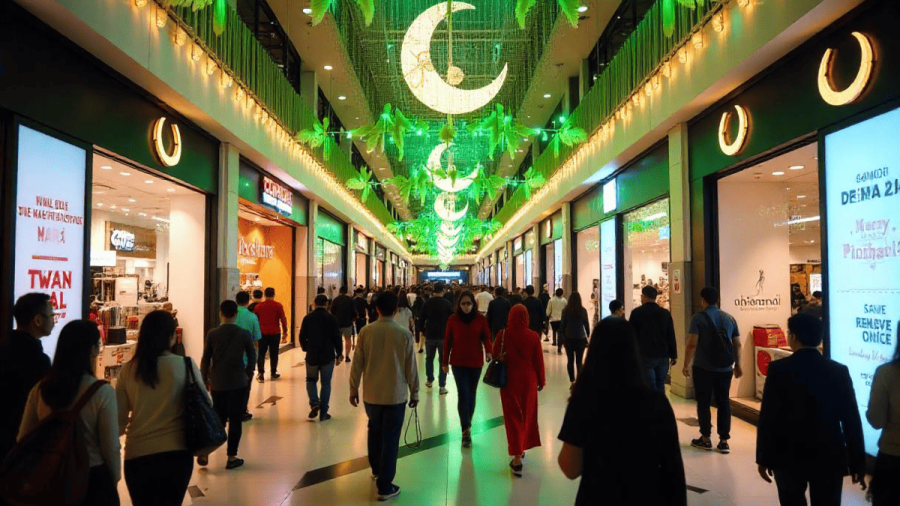
Shoppers in a Malaysian mall with Hari Raya decorations and digital advertising displays.

Advertising During Festive Seasons in Malaysia: Raya, CNY, Deepavali & More

Big crowds, big spending, big chances to be seen.

Festive seasons in Malaysia… you can feel it in the air. Streets get livelier, shopping bags get heavier, and somehow, everything just moves faster. Hari Raya, Chinese New Year, Deepavali—each one brings a different kind of energy. And if you’re in business, you’ll know this: it’s also when people are most open to buying, trying, and noticing something new.

People are out and about—in malls, on highways, and at airports—rushing from one place to another. Which makes it the perfect time to get your brand out there too.

Why Festive Timing Matters for Advertising

It’s simple—during peak seasons, everyone’s in motion and in spending mode. There’s this urgency to shop, travel, prepare, and celebrate. People are more alert, more emotional, and, honestly, more willing to explore new options.

And where are they looking? Everywhere. That’s why outdoor ads and transit ads work so well during festive periods. Whether it’s a banner at Mid Valley, a digital screen at KLIA, or a wrapped train on the MRT line—your message follows them wherever they go.

Shopping Mall Advertising: Where People Are Spending

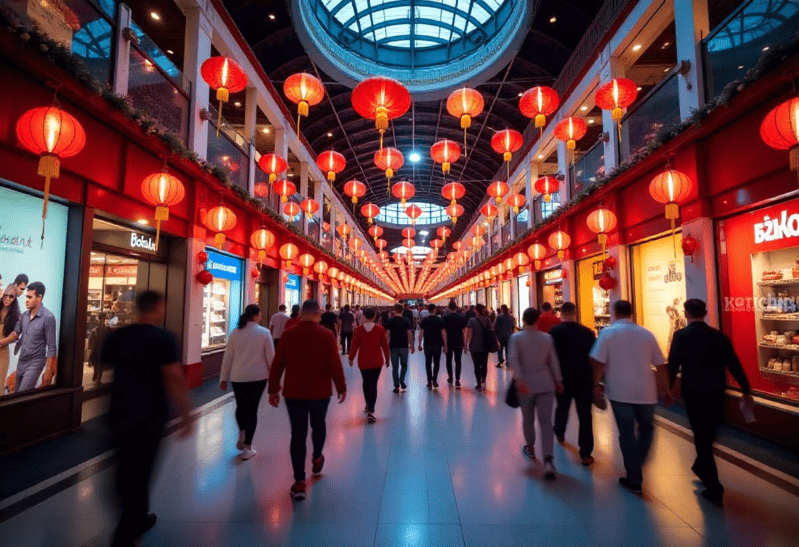
Shoppers in a Malaysian mall during festive season with digital advertising screens and holiday decorations.

Walk into any mall a week before Raya or CNY, and you’ll see it—families shopping for outfits, décor, and food. Malls are packed. And when people are shopping, they’re also noticing what’s around them.

That’s why mall media advertising is such a solid move. Think escalator panels, lift wraps, walkway screens—every space is a chance to connect. A festive-themed ad right in front of someone on their way to shop? That’s smart timing.

Especially if your product ties into the season—snacks, home goods, fashion, or services. Visibility in the right mall, at the right time, can work wonders.

Train & MRT Station Advertising: High Movement, High Attention

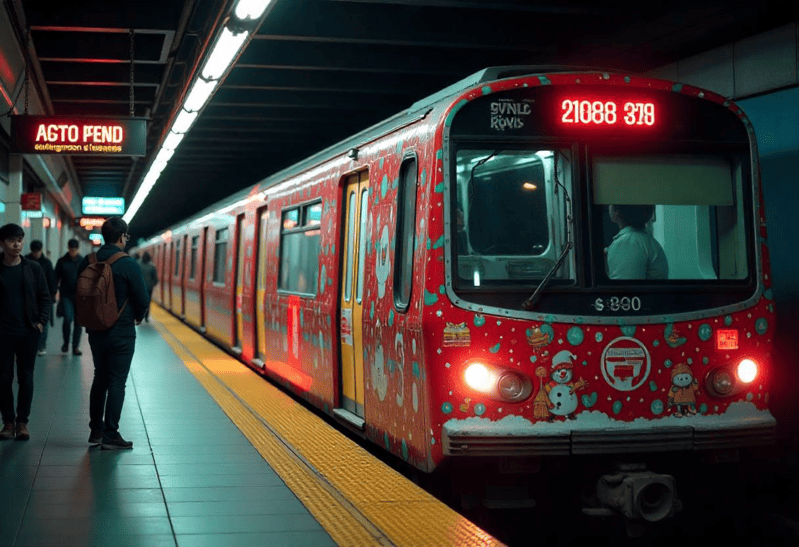
Train wrap advertising at a busy MRT station in Kuala Lumpur during the festive season.

Public transport stations see a huge spike during festive periods. The MRT, LRT, and trains are busier than usual—packed with commuters, last-minute shoppers, and those heading out of town.

MRT station advertising and train station advertising give you access to that crowd. These are spaces where people stand around, waiting. Perfect time to absorb a bold, creative ad. Even better? Train wrap advertising—turning the whole train into a moving message that travels across city lines, housing estates, and business areas. Thousands of people will see it daily, and even more during festive rush hours.

Airport Advertising: Reaching the Travelling Crowd

If you’ve ever been to KLIA the week before Raya, you’ll know the crowd is no joke. Travelers, families, business folks—all rushing to catch flights. And with them comes a golden opportunity.

Airport billboard advertising and airport terminal advertising put your brand in front of a premium audience—often with time to spare. They’re standing in line, walking through terminals, and waiting at baggage claim. That’s when your ad can quietly make its mark.

Brands that advertise in airports are seen as more established. And during festive seasons, the exposure gets even better. It’s high-traffic, high-value visibility. Still wondering why airport advertising matters? Because it gets seen—and remembered.

Highway Billboard Advertising: Catching the Balik Kampung Rush

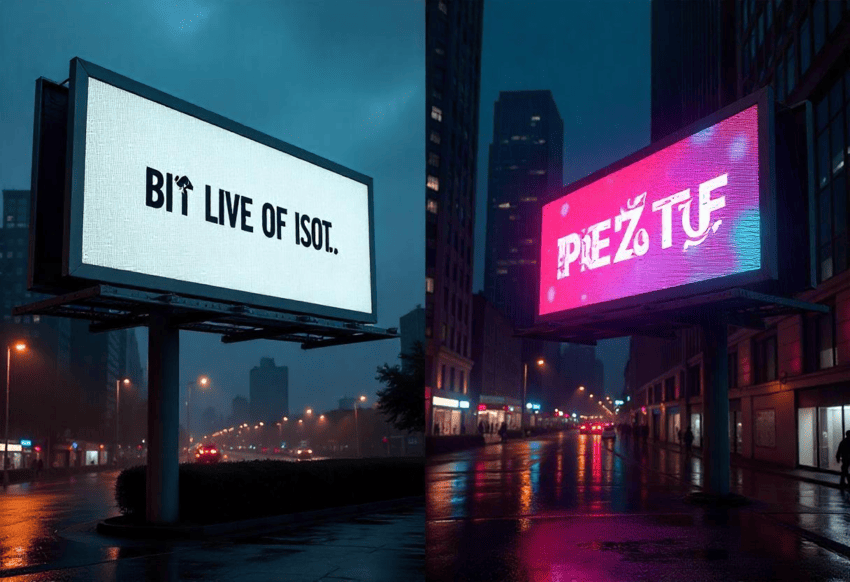
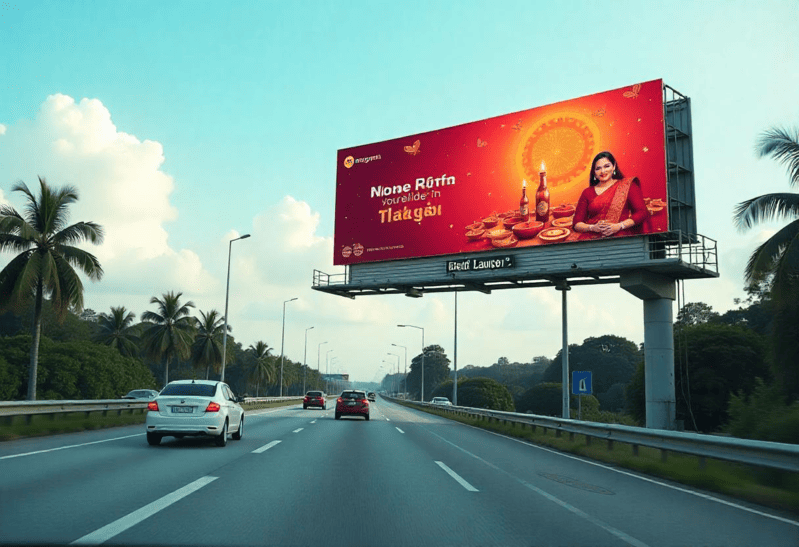
Highway billboard with festive-themed advertising along a busy expressway in Malaysia.

It’s a Malaysian tradition—packing up the car, loading snacks, and hitting the highway to balik kampung. The roads get busy. Toll areas, rest stops, and main routes—they all see a sharp jump in traffic.

That’s where highway billboard advertising shines.

When you place your ad strategically—near toll plazas, major exits, or city entries—you’re meeting drivers and passengers exactly where they are. The best part? Large, colorful, festive creations really stand out on the open road.

And it’s not just about brand awareness. A festive discount? Product launch? Event teaser? Billboards can carry that message clearly and fast.

Transit Advertising: Follow the Festive Movement

Transit ads move with the people—buses, cars, and trains. And during Deepavali or CNY, that movement gets amplified. Think about a bus wrap advertising cruising through hotspots like Klang, Little India, or Georgetown daily.

Or a well-branded car advertising Malaysia campaign weaving through neighborhoods, traffic lights, and pasar malams. These aren’t static placements. They follow the festive mood—and become part of it.

This is where transit advertising really works—blending into daily scenes but still standing out.

Design it right, time it well, and people will remember it long after the season’s over.

Book Early—Because Festive Spots Go Fast

Here’s one thing many brands learn the hard way: festive ad space isn’t something you book last minute. By then, most prime locations are taken.

If you’re serious about getting seen, planning early is key. Whether it’s mall media advertising in high-traffic spots or a full train wrap advertising activation, the good slots fill up quickly. At Avyan Advertising, we help brands secure the right platforms in the right places. We know which spots get the most traction and when to roll out for maximum impact. From shopping mall advertising in Penang to airport terminal advertising in KLIA—we’ve got you covered.

Final Thoughts

You don’t need to be everywhere. You just need to be seen where it matters.

During festive seasons in Malaysia, people are moving more, shopping more, and celebrating more. From highway billboard advertising to MRT station campaigns, the touchpoints are plenty—you just have to catch them at the right moment.

So if you’re thinking of running a campaign for Raya, CNY, Deepavali, or even Christmas—let’s plan ahead, place it right, and make sure your brand shines when it matters most.