What Is a Digital Billboard - Avyan Advertising

What Is a Digital Billboard? A Plain-English Guide for Malaysian Businesses

It’s the Screen That Changes Its Mind

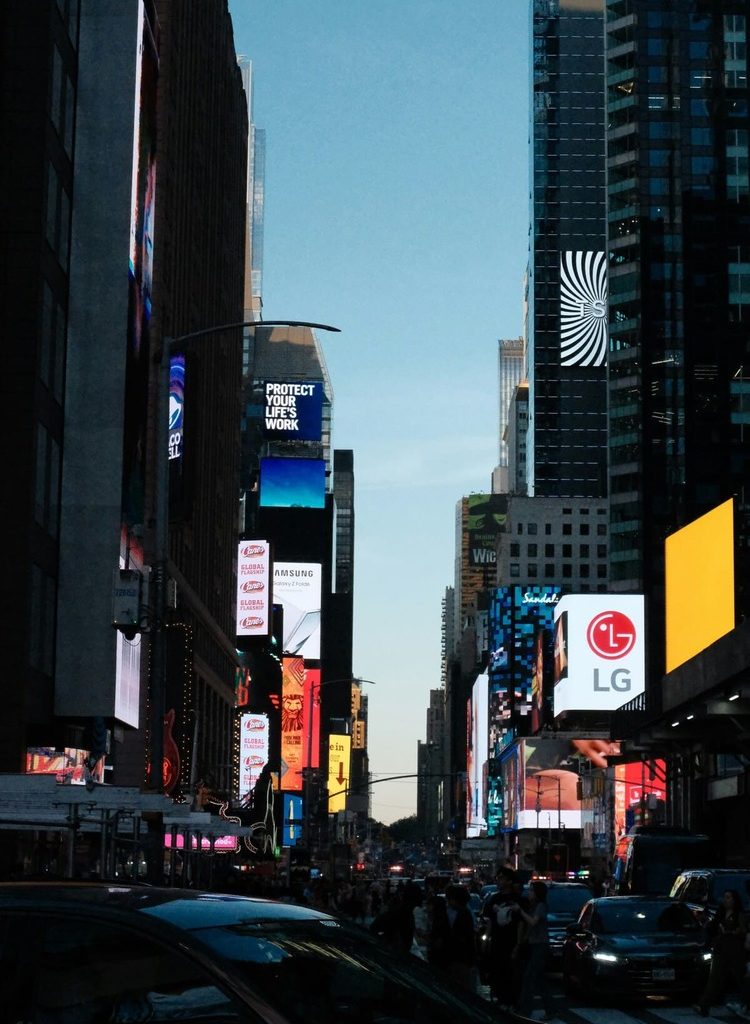
You’ve seen them even if you’ve never given them a name. A big, bright screen above a junction or beside a highway, showing one ad, then another, then another. No printed poster, no ladder, no glue. Just a screen that keeps changing what it says.

That’s a digital billboard. If you run a business and you’re wondering what they are, where they appear and whether they could work for you, here’s the plain-English version.

So, What Exactly Is a Digital Billboard?

A digital billboard is an outdoor advertising display that uses a screen, usually LED, instead of a printed poster. The content is a digital file, like an image or a short video, which is uploaded and shown on the screen.

Compared with a traditional printed billboard, the big differences are:

  • It can show more than one ad. Different advertisers take turns on the same screen.
  • It can change quickly. Updating the message means uploading a new file, not printing and installing a new sheet.
  • It can move. Some screens show animation or short video, not just still images.
  • It can be timed. Depending on the setup, different messages can run at different times of day.

Think of a printed billboard as a shop sign and a digital billboard as a noticeboard that updates itself.

Where Do You See Digital Billboards?

Digital billboards aren’t only on highways. They appear in several kinds of places:

  • Roadside and junction screens.
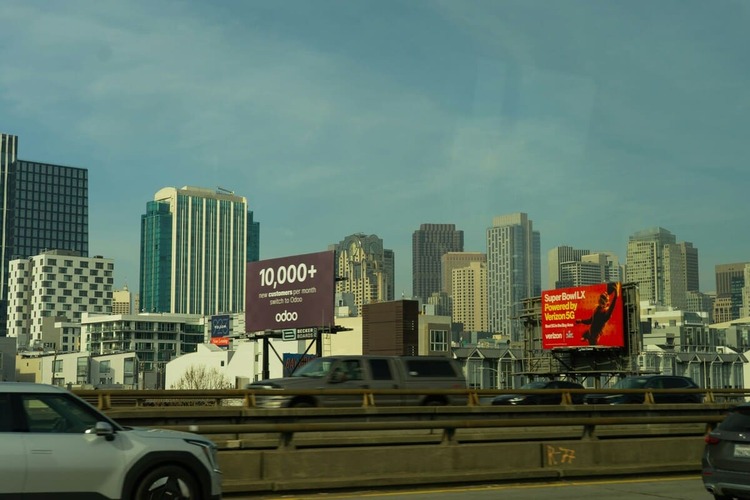
    Large screens beside major roads, aimed at drivers and passengers. These are the ones most people think of first.
  • Building and facade displays.
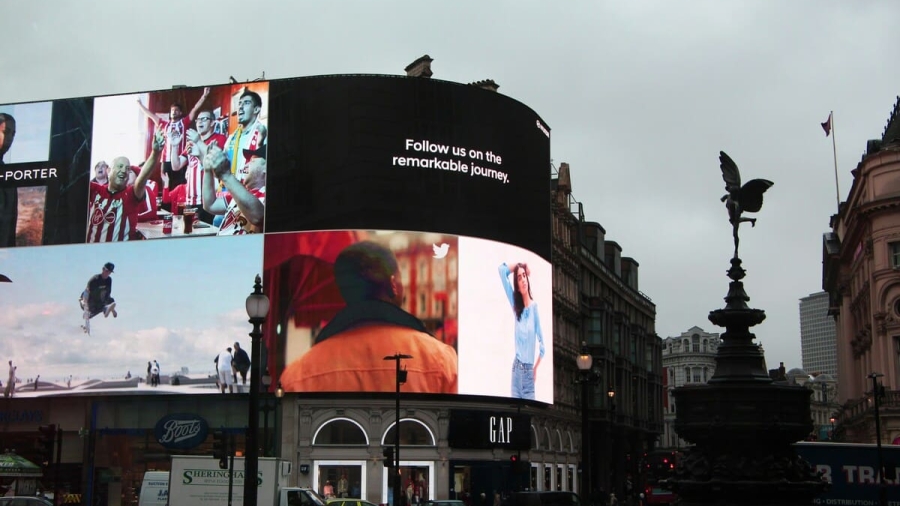
    Big screens on the sides of buildings in busy areas, often seen from far away and from several directions.
  • Mall and indoor screens.
    Screens inside shopping centres and public spaces, seen by people walking and browsing. These tend to allow more detail, since viewers are not moving as fast.
  • Transport screens.
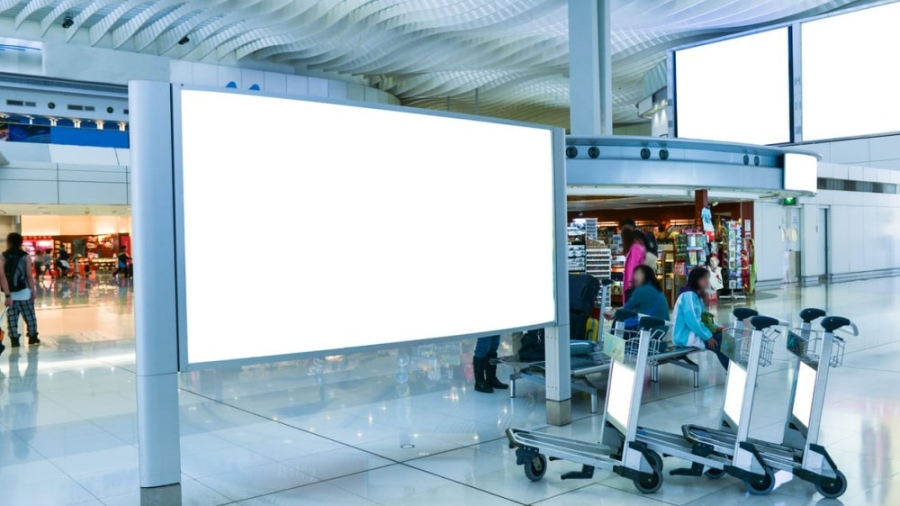
    Screens at stations, airports and bus stops, where people wait or walk through. Viewers here often have a little more time.

Each type suits different goals, so the place matters as much as the screen.

How Does an Ad Appear on One?

Here’s the short version of what happens behind the scenes:

  1. An advertiser books a slot. Often a short time within a repeating loop.
  2. The design is prepared in the right size and format for that screen.
  3. The file is uploaded and scheduled. It’s set to play at certain times or days.
  4. The screen plays the loop. Your ad appears, then other ads take their turn, and then yours comes around again.

The details, like slot length and scheduling options, depend on the site and provider, so it’s worth asking what applies to the screen you have in mind.

What Are Digital Billboards Good For?

  • Promotions that change. A lunch special, a weekend sale or a countdown to an event.
  • Launches. Getting a new outlet or product noticed quickly.
  • Time-based messages. “Breakfast now” in the morning, “Dinner sorted” in the evening.
  • Brands with several messages. One screen can show different products or offers over time.
  • Fast updates. If something changes, you can change the ad without a new print run.
What Is a Digital Billboard 01 - Avyan Advertising

What Are the Limits?

Like any ad type, digital billboards aren’t right for everything.

  • You share the screen. Your ad shows for a short slot, then someone else’s appears.
  • People get a glance. Drivers especially have only a moment, so the message must be short and clear.
  • Tracking is indirect. You can use a QR code, promo code or “how did you hear about us?”, but there’s no click report.
  • Design matters. Files need to match the screen, and complicated creative gets lost.
  • Approvals can apply. Content rules and approval steps vary, so it’s best to ask early.

Digital vs Printed: Which One Do You Need?

Neither is better. They simply do different jobs.

A printed billboard works well if your message is simple and won’t change, and you want a constant presence in one spot. A digital billboard works well if you want to change your message, run timed promotions or show more than one idea.

Many brands use both. A printed board builds steady familiarity in one place, and a digital screen handles the offers that come and go.

A Made-Up Example

Imagine a new bubble tea shop, “Teh Manis Co.”, opening near an office district. Its digital billboard shows the shop’s name and a bold photo of its signature drink. During the morning, the message reads “Start your day sweet.” At lunch, it changes to “Lunch break? 2 minutes away.” In the evening, it shows “Late finish? We’re open till 10pm.”

One screen, three messages, each matched to the moment.

* The shop and the lines are fictional.

Is It Right for You? A Quick Check

  1. Do I have an offer or message that changes?
  2. Can I say it in a few words?
  3. Do my customers pass the screen’s location?
  4. Am I happy to share the screen in return for flexibility?
  5. Do I have a way to track, like a QR code or WhatsApp keyword?

If you said yes to most, a digital billboard is worth considering. If you’d rather have one constant message, a printed billboard may suit you better. You can read more about the wider options on the outdoor billboard advertising page.

The Short Version

A digital billboard is a screen that works like a billboard but can change, move and be timed. It’s flexible, quick to update and suits promotions that don’t stay the same for long. The trade-offs are a shared screen and a short glance, so keep your message simple.

Still deciding between a digital screen and a printed board? Bring your idea to the Avyan team, and we’ll help you work out which one would do more for you, or whether you need both. Start with a quick message. There’s no obligation, only some honest advice on whether a digital billboard suits your plans.

Is Advertising on Billboards Worth It for Small Businesses in Malaysia - Avyan Advertising

Is Advertising on Billboards Worth It for Small Businesses in Malaysia?

“Billboards Are for Big Brands.” Are They, Though?

Picture the billboards you pass on your way to work. Banks, telcos, property launches, big retail names. It’s easy to conclude that billboards are a big-brand game, and that a small business has no place up there.

But that’s not the whole picture. Plenty of local businesses use them, and the real question isn’t whether you’re big enough. It’s whether advertising on billboards fits what you’re trying to do. Let’s go through it honestly, including the parts that don’t flatter billboards.

The Short Answer: Sometimes, and It Depends on the Spot

Billboards are worth it when your customers pass the spot, your message is simple, and you can keep the ad up long enough to be noticed. They’re less worth it when you need instant, trackable sales, have a very tight budget, or sell to people who are nowhere near the location.

In other words, the size of your business matters much less than the match between the billboard and your goal.

Where Billboards Win

1. They’re always on.
A billboard doesn’t pause, scroll away or get skipped. It’s there every morning, every evening and every weekend for as long as the campaign runs.

2. They build familiarity.
People who pass the same road every day see your name again and again. After a few weeks, you stop being a stranger. That matters when it’s time to choose a clinic, a tuition centre or a place to eat.

3. They make a small business look established.
A well-placed billboard can lift how people see you. Even a small shop can look bigger and more trusted with a clear, confident ad on a busy road.

4. They can be very local.
A billboard on a township road reaches the people who live and drive nearby, which is exactly who many small businesses want.

5. They support everything else you do.
Someone sees your billboard, then sees your Facebook ad, then searches your name. Each one helps the others work harder.

Where Billboards Fall Short

Let’s be fair about the downsides.

  • Tracking is indirect. You can use a QR code, promo code or “how did you hear about us?”, but you won’t get a click report.
  • The message must be short. A few words, one image, one action. If your offer is complicated, it won’t fit.
  • It’s seen quickly. Drivers get a glance, so the design has to be sharp.
  • It needs time. One short run rarely does much. Familiarity comes from repetition.
  • It can take planning. Choosing a spot, preparing the design and arranging approvals takes lead time.
  • It isn’t precise. You choose a location, not an individual customer.

None of these are deal-breakers. They just mean billboards suit some jobs better than others.

Is Advertising on Billboards Worth It for Small Businesses in Malaysia 01 - Avyan Advertising

What Small Businesses Should Think About

If you’re a smaller business, a few things matter more than they do for a big brand.

  • Location beats size. A modest billboard where your customers pass every day usually does more than a huge one where they never go.
  • Focus on one area. You don’t need to be everywhere. One or two well-chosen spots near your customers can be enough.
  • Think about what you do with the attention. If someone sees your billboard and searches for you, will they find a clear website, active social pages and an easy way to contact you? A billboard can create interest, but your online presence has to catch it.
  • Plan your budget around time. A smaller billboard that runs for longer often beats a bigger one that disappears quickly. Share your budget openly with your provider, and ask what’s realistic.

Who It Suits

Advertising on billboards tends to work well for:

  • Local service businesses like clinics, tuition centres, salons and workshops
  • Restaurants and cafes wanting to be noticed near their outlet
  • New outlets and launches that need to be known quickly
  • Property agents and developers building a name in an area
  • Events and seasonal promotions with a clear date
  • Brands that want steady, everyday visibility in a particular area

Who Might Want to Wait

It may not be the best first step if you:

  • Only sell online and need to track every ringgit
  • Have a very small budget and could only afford a very short run
  • Serve customers far from any good location
  • Have a complicated offer that can’t be said in a few words
  • Need results this week, not steady growth

In those cases, starting with social media, Google or a smaller local format may make more sense, and billboards can come later.

A Made-Up Example

Imagine a small family-run bakery, “Roti Hangat”, in a busy township. The owner is torn between boosting posts online and putting up a billboard. She notices that most of her customers live within a few kilometres and pass one particular road on the school run. She picks a billboard on that road with a photo of a warm loaf and a simple line: “Fresh from 6am. Next left.” A QR code on the design leads to a WhatsApp ordering chat.

Over a few weeks, orders by WhatsApp go up, and several new customers mention seeing the billboard. Some of the effect is hard to measure, but the bakery feels more visible in the neighbourhood. (The bakery and the story are fictional, so please don’t treat them as real results.)

Five Questions to Check Your Fit

  1. Do my customers pass this spot regularly?
  2. Can I say my offer in a few words?
  3. Can I run the ad for several weeks?
  4. Do I have a clear way to follow up, like a website or WhatsApp?
  5. Am I looking for steady awareness, not instant sales?

Yes to most? Billboards deserve a serious look. No to most? Another channel may suit you better right now.

So, Should You Book One?

For the right small business, with the right spot and a simple message, yes, advertising on billboards can be well worth it. It won’t replace your online presence, and it isn’t the best tool for every goal. But as a steady, visible reminder in the places your customers already travel, it holds its own.

Not sure whether you’re on the yes side or the not-yet side? Tell Avyan about your business, who you want to reach and roughly what you’d like to spend, and we’ll tell you what we think, even if the answer is “wait.” You can share the details here. It’s an opinion, not a pitch, and it could save you from guessing about advertising on billboards.

Advertising on Billboards - Avyan Advertising

Advertising on Billboards: How to Design One Drivers Can Read in 3 Seconds

If They Can’t Read It Before the Next Lamp Post, It’s Too Long

Imagine you’re driving along the highway. Brake lights ahead, a GPS voice in the background, a message pinging on your phone. Somewhere in the corner of your eye is a billboard. You get a second or two to take it in, maybe three if the traffic is slow.

That’s the reality of advertising on billboards. The people you want to reach aren’t standing there reading. They’re moving. So the design has to do its job almost instantly. Here’s how to make that happen.

Start With the “Three-Second” Rule

Three seconds is a handy rule of thumb, not a scientific limit. It simply reminds you of the standard to aim for: if someone can’t understand your billboard in the time it takes to glance at it, it needs simplifying.

Before you design anything, finish this sentence: “When drivers see this, I want them to remember ___.” Just one thing. Your brand name, a new launch or a single offer. Everything else on the billboard exists to support that one thing.

Keep the Words to a Handful

The single biggest design fix is cutting words. A common guideline is to use only a few words, and the fewer you use, the bigger they can be.

  • Aim for a short headline. If you can say it in six words, don’t use twelve.
  • Drop the details. Opening hours, long address lists and terms and conditions don’t belong on a billboard.
  • Put your name where it can be seen. A great line means little if nobody knows who it’s from.
  • Keep one idea. Two offers on one billboard become zero offers in the driver’s memory.

Here’s a made-up before and after to show the difference. (The businesses and lines are fictional.)

Before: “Pintar Academy: Quality Tuition for Primary and Secondary Students. Maths, Science, English and Bahasa Malaysia. Small Classes. Experienced Teachers. Call Now for a Free Trial Class.”

After: “Free Trial Class. Pintar Academy. 3 Minutes From Here.”

The second one can be read in one glance, and it still gives a reason to act.

Make the Text Big and Bold

If the words are small, no one will read them from a car.

  • Use thick, clean fonts. Fancy scripts and thin strokes disappear at a distance.
  • Go as large as the space allows. If it feels too big on your screen, it’s probably about right.
  • Stick to one or two fonts. One for the headline and, if you must, one for supporting text.
  • Be careful with all caps. Short headlines in caps are fine, but long lines get harder to read.
  • Leave space between lines and letters. Cramped text blurs together at speed.

A useful test: shrink your design to the size of a postage stamp on your screen. If you can still make out the message, you’re on the right track.

Advertising on Billboards 01 - Avyan Advertising

Use Colour and Contrast Wisely

Billboards sit in sunlight, shade, rain and darkness, and they’re often seen at an angle. Strong contrast keeps them readable in all of it.

  • Dark on light, or light on dark. Avoid light grey on white or pale text on a busy photo.
  • Two or three colours is plenty. Your brand colours are a good starting point.
  • Watch text over photos. If words sit over an image, make sure the background is calm or darkened.
  • Stand out from the neighbours. Look at the other signs and billboards around the spot. If everything is blue, a bold orange might get more attention.
  • Think about night-time. If your billboard is lit, check how the colours look in the dark.

Choose One Strong Image

A picture can say what words can’t, and it takes no time to read.

  • Use one main visual. A single clear photo or illustration beats a collage.
  • Show the product or result. A steaming bowl of laksa does more than a logo alone.
  • Pick clear over clever. If people need to puzzle it out, you’ve lost them.
  • Use real photos where possible. They feel more honest than generic stock images.
  • Keep the main focus away from the edges. The edges can be trimmed, hidden or hard to see from some angles.

Make the Next Step Easy

Even a great billboard needs to point somewhere. Pick one action and make it simple.

  • A short website address or phone number that’s easy to remember.
  • A direction cue, like “Next left” or “2 minutes away”, if your shop is close.
  • A memorable name, so people can search for you later.
  • A QR code, only if people will see it while stopped or walking. Drivers on a highway can’t scan a code, so on fast roads it’s wasted space.

Match the action to what people can actually do. A driver can’t call or scan, but they can remember a name and look it up later.

Match the Design to the Spot

The same design won’t work equally well everywhere. Fast highways need the shortest message and the biggest text. Slower city roads can handle a short second line. On digital screens, make sure your name stays visible throughout the loop, not just at the end. And ask your billboard provider for the exact size and file requirements before you finalise anything.

A Quick Pre-Print Checklist

  1. The glance test. Show it to a friend for three seconds, then ask what they remember.
  2. The distance test. View a small version from across the room.
  3. The word count. Could you cut a few more words?
  4. The contrast check. Is every word easy to read against its background?
  5. The brand check. Is your name clear and big enough?
  6. The spelling check. Check names, numbers and contact details twice.
  7. The consistency check. Does it match the look of your other ads?

Read It Once, Remember It

A good billboard is a bit like a good road sign. It says one thing, clearly, and then gets out of the way. Cut the words, enlarge the text, pick one image and make the next step obvious, and you’ll give your advertising on billboards the best chance of being remembered.

Got a draft design sitting in a folder somewhere? The team at Avyan is happy to give it an honest once-over and tell you what we’d tweak before it goes anywhere near a billboard. Send it over whenever you’re ready. It’s a quick look, not a sales pitch, and a few small tweaks can make your advertising on billboards a lot easier to read.

digital-billboard

What Is a Digital Billboard?

The Billboard Got a Glow-Up

It’s likely that you’ve seen one recently if you’ve driven by a busy highway, visited a mall, or wandered through a city square—a vivid, colorful screen that flashes announcements, advertisements, or movies. These days, you may see digital billboards everywhere. However, what is a digital billboard exactly? Is there more going on behind the scenes, or is it just a more elaborate version of a traditional billboard? This post will explain it to you without using technical terms, whether you’re a business owner considering advertising or just an interested bystander.

The Short Answer:

Let’s get started simply. Instead of utilizing printed posters or paint, a digital billboard is an electrical display that uses LED or LCD panels to present messages or advertisements. A digital billboard can switch between adverts every few seconds rather than remaining still for weeks. Imagine it as a slideshow, but on a big screen that is impossible to miss.

What’s the best part? Everything is managed from a distance. This implies that content can be changed instantaneously and that changing vinyl doesn’t require someone to scale a ladder.

How Is It Different From Traditional Billboards?

You might be thinking, “Okay, so it’s just a screen. What’s the big deal?”

Well, compared to the old-school kind, digital billboards come with a few major advantages:

1. Multiple Messages in One Spot

Regular billboards often display one advertisement at a time for weeks at a time. Six to ten separate advertisements, each rotating every few seconds, can be displayed on a digital billboard during the same time frame.

2. Faster Updates

Have an event or sale at the last minute? Almost instantly, you can post a fresh advertisement to a digital billboard. No waiting, no printing.

3. Animations and Motion

Simple motion graphics or transitions are supported by certain digital billboards, which makes them far more visually appealing than static ones.

4. Targeted Scheduling

To target the correct audience at the right moment, you can only broadcast your advertisement during certain hours of the day, such as lunch breaks or rush hour.

Where Do You Usually See Them?

Digital billboards are popping up everywhere. But here are some of the most common spots:

  • Highways and major roads – For commuters and drivers
  • City centers and downtown areas – Lots of foot traffic, lots of eyeballs
  • Shopping malls and retail hubs – Places where consumers are already in the buying mood.
  • Airports, bus stops, and train stations – Excellent places to connect with travelers.
  • Stadiums and event venues – Ideal for intense brand awareness.

Basically, if there’s a screen in a public space and a bunch of people passing by—it’s fair game for digital advertising.

Why Are Businesses Using Them?

The answer to the question of why businesses are moving toward digital is straightforward: flexibility and visibility.

Here’s what businesses love about digital billboards:

1. Real-Time Control

Do you need to alter your advertisement due to a promotion or price reduction? From your laptop, you may quickly replace it. No reprinting. No delay.

2. Better ROI

Multiple advertisers can share a single billboard with rotating slots, which frequently reduces costs per brand while reaching a large audience.

3. High Impact

Let’s be honest: moving screens with vibrant colors simply grab your attention more than paper posters do.

4. Eco-Friendly (Sort of)

There is less physical waste, no paper, and no ink. It is a step in the greener direction, even though electricity is still used.

Are There Any Downsides?

Although digital billboards seem fantastic, there are a few considerations to consider:

  • Short display time: The duration of your advertisement may be limited to 8–10 seconds.
  • Shared space: There are other brands on the screen than yours.
  • Cost: Although digital media can be economical, premium locations and time slots can be costly.

Digital signage may also be subject to city or national rules, particularly those pertaining to brightness, movement, and distraction (particularly in close proximity to roadways).

Who Should Use Digital Billboards?

Almost everybody who wants to increase their exposure, particularly in crowded markets.

  • Retailers can announce product launches or flash sales.
  • Restaurants can show off daily specials during meal hours.
  • Event organizers can create buzz for concerts or shows.
  • Real estate agents can promote new property listings in high-traffic zones.
  • Startups and SMEs can look bigger than they are with a strong presence.

What’s the best part? You don’t require a large advertising budget. Depending on the location and duration, several platforms now offer digital billboard spaces for as cheap as a few hundred dollars.

Final Thoughts: Should You Care About Digital Billboards?

In a word: yes—particularly if you work in marketing, run a company, or simply enjoy understanding how advertising operates..

Digital billboards are among the outdoor advertising formats with the greatest rate of growth. They blend the clever adaptability of digital media with the striking visibility of conventional billboards. So the next time you pass by a glowing ad on a city corner, you’ll know exactly what it is—and why it’s there. Want your brand up there next? Let’s make it happen.

TL;DR:

What is a digital billboard? It is a modern, screen-based alternative to classic billboards that enables companies to promote remotely and dynamically. They are adaptable, striking, and everywhere.