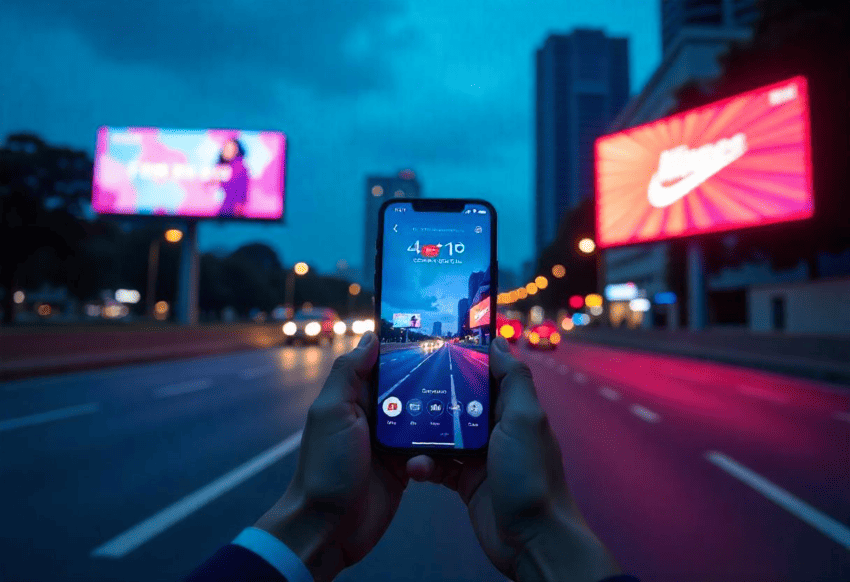
A Great Billboard in the Wrong Place Is Still Wasted
You can have the cleverest line and the prettiest design, but if the billboard stands where your customers never pass, it won’t do much. Where it goes, and what kind of billboard it is, matter as much as what it says.
If you’re new to billboard advertising, the choices can feel overwhelming. Highway or city street? Static or digital? Big or small? Here’s a simple way to work through it.
Step 1: Start With Your Customer, Not the Billboard
Before looking at locations, ask who you’re trying to reach and where they are.
- Where do they live, work and shop?
- How do they travel? By car, motorbike, train or on foot?
- When are they on the move? Morning rush, lunchtime, weekends?
- What are they thinking about at that moment? Getting to work, heading home, looking for lunch?
A billboard is not meant to reach everyone. It’s meant to reach the right people, at a place and time that makes sense.
Step 2: Understand the Main Location Types
Different roads and areas give different results.
- Highways and major roads.
Drivers pass quickly, often at speed, so a short bold message works best. These locations suit brands that want wide, city-level or state-level visibility, such as property launches, banks, telcos and big retail.
- City centre roads.
Slower traffic and more pedestrians mean more time to look. They suit lifestyle, F&B, entertainment and anything linked to the city’s business and shopping areas.
- Neighbourhood and township roads.
These roads are part of people’s daily routine. They suit local businesses such as clinics, tuition centres, restaurants and car services, because customers live and travel nearby.
- Roads near malls, stations and offices.
These spots catch people on their way to somewhere specific. They work well for retail promotions, events and nearby outlets.
- Routes towards airports, ports and tourist areas.
Good for brands targeting visitors, such as hotels, tourism, travel services and car rental.
The right choice depends on your customers, not on which road sounds most impressive.
Step 3: Check the Practical Things About the Spot
Once you have a shortlist, look closely at each one.
- Visibility. Can drivers and pedestrians see it clearly, or is it hidden behind trees, bridges or other signs?
- Direction of traffic. Does the billboard face the flow of traffic, so people see it coming toward them?
- Speed and distance. The faster the traffic, the shorter and larger the message needs to be.
- Surroundings. Is it surrounded by many other billboards or signs competing for attention?
- Lighting. Is it visible at night and in the rain, not just on a sunny afternoon?
- Your own premises. If you want people to visit, how close is it to your shop or outlet?
If possible, visit the spot at different times of day and look at it as a customer would.

Step 4: Choose a Format
Billboards come in a few main formats.
- Static billboards.
A printed design that stays the same for the whole campaign. They’re simple, familiar and good for steady brand awareness. The trade-off is that changing the message means reprinting.
- Digital billboards.
Screens that can show moving images and different messages. They suit promotions that change often, time-based offers and brands with several messages. The trade-off is that your ad shares the screen, so your time on screen is shorter.
- Large-format and building wraps.
Big displays on buildings or structures. They create a strong first impression and suit launches and major brand moments.
A simple way to decide: if your message won’t change, static is often enough. If it will, digital gives you room to adapt.
Step 5: Match the Message to the Spot
The same design won’t work everywhere.
- Fast roads: a few words, one image, a clear brand name.
- Slower roads: a little more detail is fine, such as a short second line or a location cue.
- Near your outlet: add directions, like “Next left” or “2 minutes away”.
- Digital screens: keep key information on screen for the whole loop, not just the last second.
Whatever the spot, one message and one action is the rule.
Step 6: Ask the Right Questions
When talking to a billboard provider, it helps to know what to ask.
- Who passes this spot, and when? Ask how they describe the audience, and what that’s based on.
- What are the format and size options?
- How long can I run the ad, and how soon does it start?
- What approvals or permits are needed? Ask what applies to the location and format, and who handles them.
- What are the design requirements? Sizes, file formats and safe areas for text.
- How will I know it’s working?
You don’t need to be an expert. A good provider will explain the answers clearly, and the way they answer tells you a lot.
A Made-Up Example
Imagine a new tuition centre, “Pintar Academy”, in a growing township. The owner is tempted by a big highway billboard, but her students are mostly children from nearby neighbourhoods and their parents. She chooses a static billboard on a township road that parents use for the school run, with a simple line: “Free trial class. 3 minutes from here.” A QR code on the design leads to a WhatsApp chat.
It’s a smaller spot than the highway, but it reaches the right people near the centre.
*The centre and the story are fictional.
Two Mistakes Worth Avoiding
- Picking the busiest road by default. More traffic isn’t always the right traffic.
- Skipping the site visit. Photos can hide a lot.
Quick Fit Check
- Do my customers pass this location regularly?
- Can I explain my offer in a few words?
- Is the format right for how often my message changes?
- Have I asked about approvals and design requirements?
- Do I have a way to track, like a QR code or WhatsApp keyword?
If most answers are yes, you’re in good shape to move forward.
Where Will Your Billboard Live?
Good billboard advertising starts with a simple question: who do I want to reach, and where are they already? Answer that, match the location and format to your goal, and keep the message short. The rest becomes much easier.
Still not sure whether that busy highway or the quiet township road is the better bet? Avyan can look at your customers and your goal and point you towards a spot that makes sense. If you’d like a second opinion on your billboard advertising plan, send us a note whenever you’re ready. There’s no pitch attached, only a straight answer.