MRT Ads in Malaysia

MRT Ads in Malaysia: 6 Creative Ideas Local Brands Can Borrow

Same Wall, Very Different Results

Walk through any MRT station and you’ll see dozens of ads. A few make you smile or stop for a second. The rest blend into the background like wallpaper. What’s the difference? Usually, it’s not the budget. It’s the idea.

If you’re planning MRT ads for your brand, a clever concept can do more than a bigger panel. Here are six ideas you can borrow, with a few made-up sample lines to show how each one might sound.

Note: all the business names and lines below are fictional.

Idea 1: Talk to the Commute Itself

The best train ads feel like they belong to the place they’re in. Everyone on the platform shares the same little struggles: the crowded carriage, the long wait, the 6pm squeeze. Speak to that, and people feel like you get them.

Sample: “Your train is two minutes away. Your teh tarik at Kopi Sudut is two minutes from the exit.”

This works well for cafes, clinics, gyms and anything near a station. It’s simple, relatable and easy to read in a glance.

Idea 2: Use Real Distance and Directions

Commuters love practical information. A line like “Exit B, 3 minutes’ walk” turns your ad from a nice picture into something useful.

Sample: “Sore shoulders after a long week? Senyum Physio is 3 minutes from Exit B.”

If your business is close to a station, put that closeness front and centre. It answers the first question people have, which is “is it convenient?”

Idea 3: Run a Station-Only Offer

Give commuters a reason to act, and a way for you to track it. A small offer that only appears on your train ads does both.

Sample: “Spotted this at the station? Show it at the counter for a free upgrade to large.”

It makes the ad feel like a little secret reward, and it tells you exactly how many people came because of it. Even something as simple as a promo code, like “MRT10”, does the job.

Idea 4: Tell a Story Across Several Panels

If you’re booking more than one spot, don’t just repeat the same ad. Break the message into a mini series. Each panel adds a line to the story, and commuters who pass several of them feel like they’re following along.

Sample sequence:

  • Panel 1: “Late again?”
  • Panel 2: “Traffic, trains, a missed breakfast.”
  • Panel 3: “Grab a quick brekkie at Rasa Kita Bakery. Open from 6am.”

This is a great way to make use of repeat exposure, because people who ride the same line every day get to the punchline eventually. Just make sure each panel still makes sense on its own, since not everyone will see them in order.

Idea 5: Match the Message to the Time of Day

If you’re using digital screens, you can change your message through the day. Same brand, different moment.

  • Morning: “Need a coffee before your 9am meeting?”
  • Lunch: “Too tired to decide? We’ve got a set lunch for you.”
  • Evening: “Heading home? Pick up dinner on the way.”

Even if you aren’t using screens, the idea still applies to how you choose a station. A stop in an office district is a different mood from a stop beside a university or a shopping centre.

Idea 6: Borrow a Local Moment

Festive seasons, school holidays, big events and long weekends give you something people are already thinking about. Tie your message to that, and your ad feels timely rather than random.

Sample: “Balik kampung soon? Get your car checked at Bengkel Maju before you hit the highway.”

Just remember that festive slots tend to fill up quickly, so plan ahead if you want a spot before Raya, CNY, Deepavali or year-end.
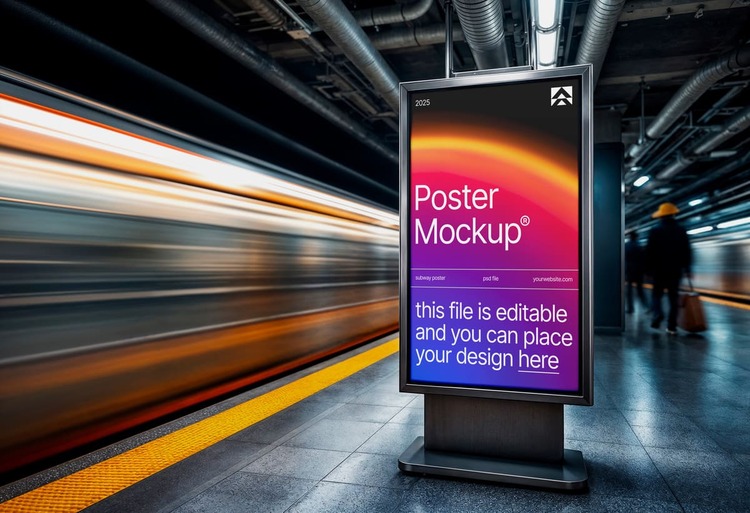
MRT Ads in Malaysia - Avyan Advertising

A Few Things That Make Any Idea Work Better

Whichever idea you pick, a few basics apply:

  • One message only. The more you add, the less people remember.
  • Short and big. If it can’t be read from a few metres away, trim it down.
  • One clear action. Scan, WhatsApp, visit or search. Pick one.
  • Consistent look. Keep your colours, logo and tone the same as your other ads so people recognise you.
  • Give it time. Familiarity builds with repetition, so plan to run it for a few weeks rather than a few days.

What to Avoid

Even a clever idea can flop if it trips on these:

  • Jokes that need a second to understand. People don’t have a second.
  • Puns that only work in one language when your audience speaks several.
  • A great line with no brand name, so nobody knows who it’s from.
  • Making claims you can’t back up, like “the best in Malaysia.”

Pick the Right Station First

A clever ad in the wrong place is still the wrong ad. Think about who actually uses each station. Office workers, students, shoppers and families all behave differently, and an idea that suits one group may fall flat with another. If you’re not sure which station suits your customers, it helps to look at where your regulars live, work and shop, then work backwards.

You can also pair train ads with other media for more punch. Someone who sees your ad at the station and then spots your mall display at the weekend is much more likely to remember you.

Time to Get Creative

Great MRT ads don’t need a huge budget or a complicated concept. They need a relatable idea, a short message and a clear next step. Pick one of the ideas above, make it your own, and see how commuters respond.

If you’d like help shaping an idea or working out which stations and formats suit it, the team at Avyan is happy to chat. Drop us a message anytime. No hard sell, just a few friendly ideas to get you started with MRT ads that people actually notice.
How to Design an LRT & MRT Advertisement People Notice 01 - Avyan Advertising

How to Design an LRT & MRT Advertisement People Notice

You Get About Three Seconds. Make Them Count.

Think about the last time you walked through a station at rush hour. Chances are you couldn’t tell anyone what was on the walls. People are moving, chatting, checking their phones and hunting for the right platform. Even the ones who are standing still aren’t actively looking for ads.

That’s the challenge when you design an LRT & MRT advertisement. A great location gets your design in front of people, but the design itself decides if anyone remembers it. Here’s how to make one that does.

Start With One Idea

The most common mistake is trying to say everything. Your services, your promo, your address, your social media handles, all in one panel. The result is a wall of text that nobody reads.

Before you open any design software, finish this sentence: “I want commuters to remember that ___.” Just one thing. A new outlet. A weekend sale. A brand name. Everything else on the design should support that one idea.

Write a Headline That Works in a Glance

Your headline does most of the work, so treat it like a street sign, not a brochure.

  • Aim for a handful of words. If you can say it in six, don’t use twelve.
  • Speak to a situation people know. “Tired of the Federal Highway jam?” connects faster than “Premium property solutions.”
  • Use everyday language. A touch of Malaysian flavour, like Manglish or a bit of Malay, can feel friendly and real, as long as it suits your brand.
  • Read it from a distance. Step back a few metres from your screen. If you can’t read it in a second, rewrite it.

Choose Visuals That Do the Talking

A strong image can explain what you do before anyone reads a word.

  • Use one main visual. A single clear photo or illustration beats a collage.
  • Show the product or result. A steaming bowl of laksa works better than a logo alone.
  • Pick real over stock when you can. People can sense a generic photo. A real dish, a real team or a real outlet feels more honest.
  • Leave breathing room. Empty space isn’t wasted. It’s what makes the important parts stand out.

Get Colour and Contrast Right

Station lighting isn’t kind. Some areas are bright, some are dim, and screens can look different depending on the angle.

  • Go for strong contrast. Dark text on a light background, or the reverse. Avoid light grey on white.
  • Stick to two or three colours. Your brand colours are a good start.
  • Be careful with busy backgrounds. If you put text over a photo, make sure the words are still easy to read.
  • Stand out from the neighbours. Look at the ads around your chosen spot. If everyone uses blue, a bold orange might catch more eyes.
How to Design an LRT & MRT Advertisement People Notice - Avyan Advertising

Pick Fonts People Can Read Fast

Fancy script fonts look lovely on a laptop and terrible on a platform.

  • Choose a clean, bold font with thick strokes.
  • Use no more than two fonts: one for the headline, one for the details.
  • Keep text size large, especially on walkway ads where people read on the move.
  • Avoid all caps for long lines, as they’re harder to read. Short headlines in caps are fine.

Design for the Format You Chose

Not every spot works the same way, so a design that suits one may fail in another.

  • Platform panels: People wait here, so you can add a little more, like a short second line or a QR code.
  • Walkways and escalators: Keep it very short and bold. Think one line and one image.
  • Digital screens: Movement helps, but keep the animation simple. Make sure your name and offer are visible for the whole loop, not just the last frame.
  • Inside the train: Riders have more time, so a slightly longer message works, as long as it’s still easy to scan.
  • Train wraps: Think big shapes and one strong message. Remember that the design stretches across the whole train, so it needs to look good from far away and from the side.

Make the Next Step Obvious

A pretty ad that doesn’t tell people what to do next is a missed chance. Pick one action:

  • Scan a QR code. Make it large enough to scan, and test it on a few different phones.
  • WhatsApp us. Short numbers or a short keyword work better than a long link.
  • Say a code. “Mention MRT10 for a free drink” is simple and easy to track.
  • Search for your name. If your brand name is easy to spell, this works too.

Also think about where people are. Someone walking quickly won’t stop to scan a QR code, so match the action to the situation.

Check Before You Print

A few quick tests can save you a lot of trouble:

  1. The three-second test. Show your design to a friend for three seconds, then take it away. Ask what they remember.
  2. The distance test. Print a small version and look at it from a few metres away.
  3. The phone test. Scan your QR code and open your link on a few different phones.
  4. The spelling test. Check names, numbers and dates twice. One wrong digit can ruin a campaign.
  5. The consistency test. Does it look and sound like your other ads? If someone sees you at a station and then on social media, they should recognise you right away.

Also double-check the file sizes and formats your media team needs, and share your design early so there’s time for fixes.

Common Design Slip-Ups

  • Using tiny text for terms and conditions that nobody will read on a platform
  • Putting the logo too small, or leaving it out entirely
  • Adding too many colours or fonts
  • Copying a digital ad and pasting it onto a panel without adjusting it
  • Forgetting that people see it at an angle or from far away

Ready to Design Yours?

A good LRT & MRT advertisement doesn’t need to be fancy. It needs one clear idea, a short headline, a strong visual and an obvious next step. Get those four right, and your design will stand out in a very busy space.

If you’d like a second pair of eyes on your design, or help choosing stations and formats that suit it, the team at Avyan is happy to chat. Drop us a message anytime. No hard sell, just friendly feedback on your LRT & MRT advertisement.

Is LRT & MRT Advertisement Worth It for Your Brand

Is LRT & MRT Advertisement Worth It for Your Brand?

Before You Book a Station, Ask This First

It’s 8.15am. The platform is packed, the train is delayed by two minutes, and everyone is doing the same thing: staring at their phone, then staring at the wall, then staring at their phone again. Whatever is on that wall gets seen. A lot.

That’s the big promise of LRT & MRT advertisement. But “gets seen” and “gets results” aren’t always the same thing. So before you put your budget on a station wall, let’s look at where train ads really shine, where they don’t, and how to tell if they fit your brand.

Where Train Ads Win

1. People have nothing else to do.
A commuter waiting for a train has a few spare minutes and often nothing to do with them. That’s a rare moment when your message isn’t competing with ten other tabs.

2. The same faces see you again and again.
Many people take the same route every day. By the second week, your brand stops feeling like a stranger. That kind of repeat exposure is hard to buy on a feed.

3. You can pick your neighbourhood.
Choose stations near your outlet or near the crowd you want, and your message lands where it matters, not across the whole country.

4. It’s hard to scroll past.
You can’t swipe away a wall panel. Your ad is simply there, every single day, for as long as the campaign runs.

5. It builds trust by being visible.
Brands that show up in the everyday spaces of the city tend to feel more established. Familiarity makes people more comfortable when it’s time to choose.

Where Train Ads Fall Short

Let’s be fair. They aren’t perfect, and pretending otherwise won’t help you.

  • No instant click. A passer-by can’t tap your ad and buy. They have to remember you, then search for you later.
  • Measuring is indirect. You won’t get a neat dashboard. You can still track with QR codes, promo codes and “how did you hear about us?”, but it’s less exact than digital.
  • Attention is short. People are moving, chatting or on their phones. If your design needs more than a few seconds to understand, it gets lost.
  • Busy doesn’t always mean right. A crowded station is only valuable if the crowd looks like your customers.
  • One short run won’t do much. Like most traditional media, it works through repetition, not a single burst.
Is LRT & MRT Advertisement Worth It for Your Brand 01 - Avyan Advertising

What It Can Look Like in Real Life

Here’s a made-up example, just to show how it might play out. Imagine a small cafe, “Kopi Sudut”, near a busy office district station. The owner wants more weekday lunch crowd. She puts a simple panel on the platform nearest the cafe: a photo of her signature nasi lemak, big text, and a QR code for a lunch set discount.

Nobody scans on the first day. But over a few weeks, office workers start recognising the cafe. Some scan the QR code. Others just walk in at lunch and say, “I keep seeing your ad.” Some of the best results were never tracked at all, they just show up as more feet through the door.

(The cafe, the offer and the story are fictional, so please don’t treat them as real results.)

Who Gets the Most Out of It

LRT & MRT advertisement tends to be worth it if you:

  • Run a business near a station, like a cafe, clinic, gym or tuition centre
  • Are launching a new outlet, property project or event and want fast local awareness
  • Sell to daily commuters, such as office workers, students and young families
  • Want to build your name over time, not just chase clicks this week
  • Can keep the ad running for a few weeks or more

Who Might Want to Skip It (For Now)

It may not be the best first move if you:

  • Only sell online and need to track every ringgit to the click
  • Have a very small budget and could only afford a few days of exposure
  • Target a tiny niche that doesn’t ride the train
  • Have a message that is long and complicated, and can’t be boiled down to a line or two
  • Serve customers far from any station

That’s not a failure, just a sign that another channel may do more for you right now.

Train Ads vs Other Media: Different Jobs

Think of it this way. A train ad is like the signboard on the busiest street in town. Everyone walks past it, and over time they just know your name. A digital ad is more like someone tapping you on the shoulder with an offer right now. Both are useful, but they do different jobs.

That’s why many brands pair them. Someone sees your ad on the platform in the morning, spots your mall display on the weekend, then gets a reminder on social media. By the third time, you’re a familiar name. If cost is what you’re wondering about, our page on train advertising cost is a good place to start.

Five Questions to Check Your Fit

Ask yourself:

  1. Do my customers commute by train, or live and work near a station?
  2. Can I say what I want to say in one short line?
  3. Can I run the ad for a few weeks, not just a few days?
  4. Do I have a simple way to track, like a QR code or promo code?
  5. Am I looking to build familiarity, not just get instant clicks?

If you said yes to most of these, train ads are worth a serious look. If you said no to most, a different channel may suit you better, at least for now.

The Verdict: Worth It, With the Right Plan

So, is it worth it? For brands whose customers travel by train, and who are willing to be patient and keep their message simple, yes, quite often. For brands that need instant, trackable sales, it works better as one part of a bigger plan than as the whole plan.

Not sure which side you’re on? The team at Avyan is happy to look at your business and give an honest opinion on whether LRT & MRT advertisement makes sense for you. Drop us a message anytime. No hard sell, just a straight answer.

LRT & MRT Advertisement in Malaysia - Avyan Advertising

LRT & MRT Advertisement in Malaysia: A Beginner’s Guide

Your Daily Commute, Your Next Ad Space

Picture it. It’s 6pm, the platform is packed, and the train is three minutes away. Some people are scrolling, some are zoning out, and a lot of them are looking up and around, waiting. What do they see? Probably an ad.

That quiet moment of waiting is exactly why LRT & MRT advertisement has become a smart choice for brands in Malaysia. If you’ve never tried it, this beginner’s guide covers what it is, where your ad can go, and how to get started without feeling lost.

Why Train Ads Work

Commuters don’t just pass by. They wait, stand and ride, often for long stretches at a time. A few reasons this works in your favour:

  • Time to notice. Unlike a billboard you pass at 80 km/h, people on a platform have a few minutes to read, think and remember.
  • Repeat exposure. Many people take the same route every day. By the fifth or tenth time they see your ad, it feels familiar.
  • Local relevance. You can choose stations near your customers, so your message reaches the right neighbourhood instead of the whole country.
  • It’s part of the city. Train ads sit in a place people already trust and use daily, so they feel natural, not pushy.

Where Your Ad Can Appear

There’s more than one way to be seen on the rail network. Here are the main formats:

1. Station platform panels and posters.
Large panels along the platform, right where people stand and wait. Good for detailed messages, since people have time to read.

2. Entrances, walkways and escalators.
Ads along the paths people walk through the station. They catch attention as people move, so keep these short and bold.

3. Digital screens.
Screens at stations can show moving visuals and change by the day or the hour. A good fit for promotions that update often.

4. Inside the train.
Panels above the seats and along the walls. Riders sit or stand here for a while, so there’s time to take in your message.

5. Train wraps.
The whole outside of a train covered in your design, travelling across the city all day. High impact, especially for big launches and campaigns.

You don’t need all five. Many brands start with one or two formats and build from there.

Who Is It For?

LRT & MRT advertisement isn’t just for big brands. It tends to suit:

  • Businesses near stations, like cafes, clinics, gyms and tuition centres
  • Property developers promoting launches and showrooms
  • Events, roadshows and festive promotions
  • Colleges and training centres reaching students and young workers
  • Brands that want to build steady, everyday visibility in the Klang Valley and other busy areas

If your customers commute, it’s worth a look.

LRT & MRT Advertisement in Malaysia 01 - Avyan Advertising

How to Pick the Right Line and Station

Not every station is right for your business. Start by asking who rides there. Office workers? Students? Shoppers heading to the mall? A station near an office district has a very different crowd from one near a university or a shopping centre.

Then think about location. If you run a clinic in Petaling Jaya, a station close to your clinic makes more sense than one across the city. Also consider timing. Morning and evening rush hours bring the biggest crowds, while weekends may suit family-focused or leisure brands.

Tips for an Ad Commuters Will Notice

A great spot won’t help if the design is hard to read. A few simple rules:

  • Keep the message short. A few words are better than a paragraph, especially on walkways where people keep moving.
  • Go big on the text. If someone can’t read it from a few metres away, it’s too small.
  • Use strong contrast. Bold colours against a clear background stand out in busy stations.
  • Include one clear action. Visit, call, WhatsApp or scan a QR code. Pick one.
  • Stay consistent. Your colours, logo and tone should match your other ads, so people recognise you straight away.

Common Mistakes to Avoid

Most first-time train campaigns stumble on the same things:

  • Cramming in too much text and too many offers
  • Choosing a station because it’s busy, not because it fits the customer
  • Running the ad for too short a time to build familiarity
  • Forgetting a call to action
  • Using small fonts that vanish at a distance

How to Get Started

If you’re new to this, here’s a simple path:

  1. Set a goal. Is it awareness, a launch, an event or a promotion?
  2. Know your audience. Who are you trying to reach, and which stations do they use?
  3. Choose your format and budget. Start with what fits, then grow it.
  4. Design with the space in mind. Keep it simple, bold and easy to read.
  5. Book early. Popular spots fill up quickly, especially before Raya, CNY, Deepavali and year-end.

How Will You Know It’s Working?

Train ads are harder to track than a click, but you can still see the effect. Use a QR code or a promo code only on your train ads. Add a WhatsApp keyword, like “Say MRT10”. Ask new customers where they heard about you. And watch for more searches and walk-ins while the campaign runs.

Mix It with Other Media

Train ads work even better alongside others. Someone sees your ad on the platform, spots your mall display on the weekend, and then sees you again on social media. If you’d like to learn more about how moving media works in general, our writing on “what transit advertising is” is a good next read.

Final Thoughts

LRT and MRT ads are not complicated. They’re a simple way to put your brand in front of people during their everyday routine, at a time when they’re actually looking around. Pick the right stations, keep the design clean, and give it enough time to build familiarity.

If you’re curious about trying it, or just want help working out which stations and formats suit your business, the team at Avyan is happy to chat. Drop us a message anytime. No hard sell, just a friendly conversation about whether LRT & MRT advertisement makes sense for you.